.svg)



 English
 العربية

The 2026 Investor’s Guide to Luxury Real Estate in the UAE
- August 04, 2026
- /
- Buyer and Seller Guides

What if your next property acquisition wasn’t just a residence, but a shield against global volatility? Dubai’s luxury sector has kept climbing through 2026, and it’s fair to wonder whether the window for strong entry points is closing. This investing in luxury real estate UAE guide breaks down what’s actually happening in the market right now not the headline numbers everyone repeats, but the figures that hold up when you check them against official sources.
It’s natural to feel some hesitation about market bubbles or the freehold and leasehold rules that govern who can own what, and where. You want strong rental yields, the prestige of a 10-year Golden Visa, and a genuinely tax-free environment. You also want to manage a high-value asset from abroad without constant logistical stress. This guide walks through the legal frameworks, points to the districts currently delivering the strongest yields, and shows you how to scale a portfolio with a clear head rather than FOMO.
Key Takeaways
• The 2026 market is shifting toward “Experience-First” luxury, where wellness features and smart-home technology increasingly define what buyers consider premium.
• Dubai offers high-energy capital growth; Abu Dhabi offers steadier, more institutional stability. A resilient portfolio typically uses both.
• Off-plan developments carry higher capital-growth potential; the secondary market offers immediate cash flow. This guide weighs both.
• The Golden Visa investment threshold remains AED 2 million, but the rules on how that threshold is measured changed in 2026 details below.
• Professional portfolio management turns a high-value property into a low-friction, income-generating asset, especially for owners based overseas.
Table of Contents
1. The 2026 UAE Luxury Real Estate Landscape: Why Now?
2. Prime Investment Corridors: Dubai vs. Abu Dhabi
3. Strategic Asset Selection: Off-Plan vs. Secondary Market
4. Legal Framework, Residency, and Investor Security
5. Portfolio Management: The Oia Properties Edge
The 2026 UAE Luxury Real Estate Landscape: Why Now?
The UAE has positioned itself as a go-to destination for internationally mobile capital. While many legacy markets in Europe and North America wrestle with fiscal uncertainty, the Emirates offer a comparatively predictable and tax-efficient environment. The tone of the market has also changed. The speculative “flip it fast” mentality that defined earlier cycles has given way to a longer-term, wealth-preservation mindset, particularly among institutional and high-net-worth buyers.
Luxury in 2026 increasingly means “Experience-First” design: wellness technology, energy-efficient engineering, and integrated smart-home systems. This isn’t just marketing language it reflects a real shift in what tenants and buyers in the premium segment are asking for. Distinguishing standard high-end units from these tech-forward, wellness-oriented residences is one of the more useful skills a serious investor can develop, since these assets tend to command the strongest rents and the deepest tenant demand.
Economic Stability and the Tax Advantage
The UAE’s fiscal environment remains a genuine differentiator. There is no personal income tax on rental earnings and no capital gains tax on residential property, which stands in sharp contrast to cities like London or New York, where tax obligations can reduce net returns by 30% or more. This is reinforced by the Dirham’s peg to the US Dollar, which adds a layer of currency predictability for international buyers.
Market Projections for 2026
Here the picture is more nuanced than a single headline statistic suggests. Dubai Land Department (DLD) data shows luxury real estate investment value rose 26% year-on-year in Q1 2026, reaching AED 87.71 billion, while total real estate transactions across the emirate climbed 31% to AED 252 billion. Foreign investment in that same quarter reached AED 148.35 billion, drawn from buyers across more than 150 nationalities.
On rental yields, the picture varies by source and by area rather than resolving to one clean citywide figure. Recent market reports (Property Monitor, Bayut, and several licensed brokerages) put Dubai’s average gross apartment yield somewhere between 6.5% and 7.15% in 2026, with the most recent DLD-linked citywide reading on record at 7.0% for the market overall and 5.7% for apartments specifically, predating this reporting period. Community-level yields vary widely from around 4.5% on Palm Jumeirah’s ultra-prime stock to 8%+ in fast-growing, mid-market areas like Jumeirah Village Circle (JVC). If a specific yield figure matters to your decision, always verify it against the property type and community you’re actually considering, rather than relying on a single citywide average.
A note on figures: an earlier version of this guide cited a flat “17.4% luxury price increase” for 2026. That precise figure could not be verified against DLD or other official releases, so it has been replaced above with the verified Q1 2026 transaction-value data.
Prime Investment Corridors: Dubai vs. Abu Dhabi
Dubai is the higher-energy, faster-moving market. Abu Dhabi is more institutional and generally steadier. A well-built portfolio often uses both. The Etihad Rail project is gradually improving connectivity between the two emirates, which is worth watching as it may, over time, encourage investors to treat the corridor between them as a single, more integrated market rather than two separate ones.
Waterfront and island communities remain in high demand across both emirates, and diversifying across Dubai and Abu Dhabi is a reasonable way to reduce exposure to any single market’s local fluctuations while still capturing the UAE’s broader economic momentum.
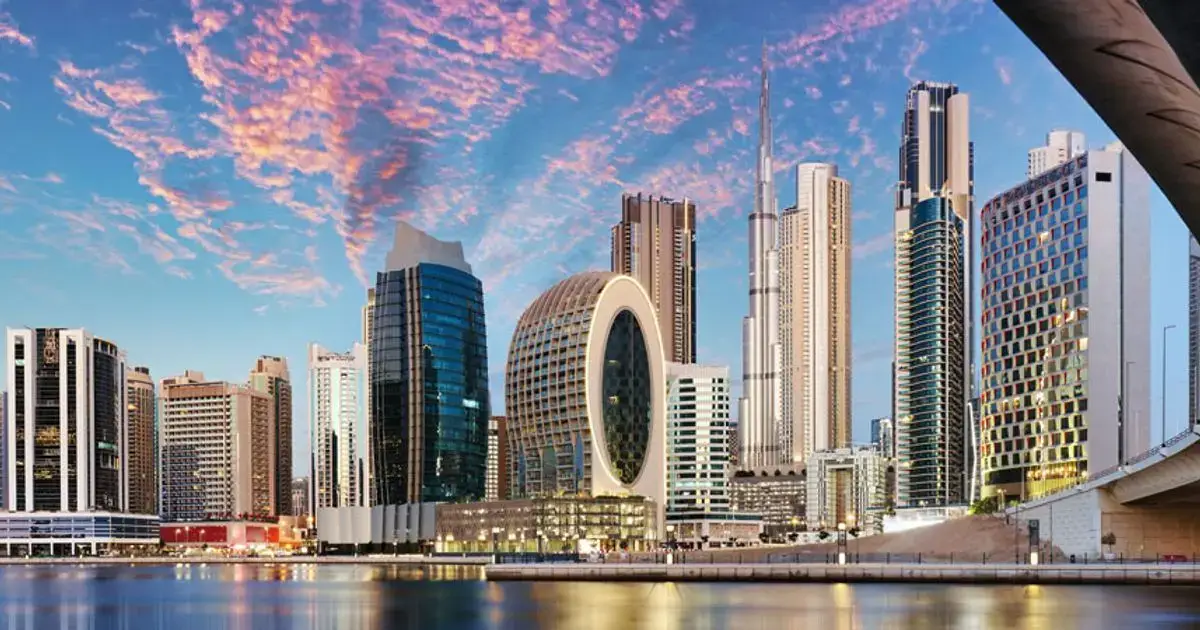
Dubai: Iconic Skyline and Waterfront Assets
Dubai Marina remains one of the most consistently cited high-yield apartment markets, though reported gross yields for the area vary meaningfully by source and unit type figures from 5.5% up to 7.8% gross all appear in recent market reports, generally converging around the mid-to-high 6% range for standard apartments before service charges. Palm Jumeirah has increasingly become a hub for branded residences, where exclusivity supports strong resale values but comparatively lower rental yields (often in the 4.5% range) since these are typically bought as appreciation plays rather than income assets. Downtown Dubai continues to trade on prestige and liquidity owning near the Burj Khalifa keeps an asset globally recognizable and easier to resell.
Abu Dhabi: The Cultural and Natural Frontier
Saadiyat Island’s cultural institutions continue to support premium pricing driven by relative scarcity of freehold stock. Al Reem Island remains one of the more accessible entry points for luxury apartments and townhouses aimed at professionals. Yas Island benefits from steady tourism-driven demand, with reported yields commonly falling in the 6% to 7.5% range depending on unit type and building age. Across Abu Dhabi’s designated investment zones, foreign buyers can hold 100% freehold ownership — a point worth double-checking on a per-project basis, since ownership rights outside these specific zones typically default to leasehold.
Strategic Asset Selection: Off-Plan vs. Secondary Market
Selecting between off-plan and secondary-market assets is less about which option is “better” and more about matching the asset to your actual goals. Completed, ready-to-move luxury units frequently command a premium over comparable off-plan units in the same area, reflecting genuine demand for immediate occupancy and immediate rental income though the size of that premium varies significantly by project and should be verified for the specific development you’re evaluating rather than assumed as a fixed percentage.
The UAE’s escrow protections remain a meaningful safeguard for off-plan buyers: developer funds for a project are legally required to be held in a regulated escrow account and released only against verified construction milestones, which is a core reason the market has stayed relatively orderly through several boom and correction cycles. Post-handover payment plans have also become more common, with some developers offering extended, interest-free instalment structures after the keys are handed over useful for liquidity planning, though terms vary by developer and should be read carefully rather than assumed to be standard across the market.
Navigating Off-Plan Opportunities
Off-plan remains the primary route to capital growth, but outcomes depend heavily on developer track record. You’re not just buying a floor plan you’re buying a promise of delivery, finish quality, and after-handover support. Emerging districts such as JVC have drawn strong investor interest partly because of rising demand for “branded residences” tied to established hospitality names, which tend to support higher occupancy and rental premiums. As with any off-plan purchase, verify the developer’s registration and project escrow status directly through DLD’s official channels before committing funds.
Maximizing Value in the Secondary Market
The secondary market suits investors who prioritize certainty over upside. Established communities such as Dubai Sports City often contain older units that can be refreshed and re-let at improved rents through targeted renovation a “buy-to-modernize” strategy that works well in built-out areas where new supply is limited. Always commission an independent valuation before closing on a resale property; pricing precision at entry is one of the few variables fully within your control.
Legal Framework, Residency, and Investor Security
The UAE’s property registration system is genuinely robust. The Dubai Land Department (DLD) and the Abu Dhabi Municipality (and its regulatory counterpart, ADREC/ADM in Abu Dhabi) record and safeguard title. Foreigners have full ownership rights in designated freehold zones meaning perpetual ownership of both land and structure. Leasehold arrangements, by contrast, grant rights for a fixed term, typically up to 99 years. For most high-value acquisitions, freehold zones are the standard choice.
Government transfer fees are straightforward and consistent across sources: Dubai charges a 4% DLD transfer fee (legally split 2%/2% between buyer and seller, though in market practice the buyer commonly pays the full 4%), while Abu Dhabi charges 2%, legally split 1%/1%. These are one-time, published costs not annual property taxes.
The Golden Visa: More Than Just Residency
The 10-year Golden Visa remains one of the strongest draws for property investors, and the AED 2 million minimum investment threshold has stayed unchanged through 2026. You can combine multiple properties to reach that threshold, and the visa extends to your spouse and children.
One detail is worth flagging because it changed materially this year and a lot of older guides still get it wrong: a federal circular dated 20 February 2026 replaced the older interpretation that required either AED 1 million paid upfront in cash or 50% equity on a mortgaged property. Under the current rule, what matters is that the DLD-recognized valuation of the property (or combined properties) reaches AED 2 million at the time of application the payment structure itself (cash, mortgage, or off-plan instalments) is no longer the deciding factor. If you’re relying on older articles for this, treat the “50% equity” rule as outdated.
It’s also worth separating this from a different, smaller change: effective April 2026, DLD removed the AED 750,000 minimum property value for the separate 2-year property investor visa but only for sole owners of fully completed units. For jointly owned properties, a new AED 400,000-per-investor minimum now applies. This is a different, shorter-term visa from the 10-year Golden Visa, and the two are frequently and incorrectly conflated in market commentary.
Ownership Structures for Global Investors
Sophisticated investors often look past individual ownership toward corporate holding structures, particularly through the DIFC or ADGM, which can offer enhanced privacy and more flexible succession planning. This is particularly relevant for non-Muslim investors who want to structure their estate outside local Sharia-based inheritance defaults. As always, engage qualified legal counsel to verify title and developer escrow compliance before you commit capital this guide is informational, not legal advice.
Portfolio Management: The Oia Properties Edge
Acquisition is just the entry point. Ongoing management is where returns are actually made or lost. Owning a high-value UAE asset without proper oversight isn’t a minor inconvenience in a market moving this fast, it’s a real cost. Oia Properties works to close that gap, handling the day-to-day so your asset performs as an income-generating vehicle rather than a source of long-distance stress.
Maximizing ROI through Professional Management
Good management is often the single biggest variable separating an average return from a strong one. That means rigorous tenant vetting, preventative maintenance, and reliable rent collection. The choice between short-term and long-term leasing genuinely matters here: well-managed short-term rentals in tourist-heavy areas like Dubai Marina or Yas Island can push gross returns above 8% in strong months, but they require active, hands-on operation and (in Dubai) a DTCM holiday-home permit. Long-term leases trade some upside for stability, typically landing in the 6% to 7.5% range with far lower turnover and management overhead.
Diversification: From Abu Dhabi to the North Coast of Egypt
Real portfolio resilience often means looking beyond a single market. For UAE-based investors, Egypt’s North Coast has increasingly been discussed as a complementary, higher-growth frontier alongside the steadier, tax-free yields available in Abu Dhabi and Dubai. Managing assets across two countries is logistically demanding on your own a single trusted partner who understands both markets removes a meaningful amount of that friction.
Secure Your Strategic Position in the 2026 Market
The 2026 UAE market rewards investors who verify before they act. Dubai’s high-energy growth and Abu Dhabi’s institutional stability can work well together in a single, diversified portfolio. This guide has walked through the practical path from selecting off-plan or secondary-market assets to securing a 10-year Golden Visa under the current (post February 2026) rules. Acquisition is only step one; ongoing, well-informed management is what protects and compounds that initial decision. Oia Properties works across both Abu Dhabi and Dubai, from valuation through to full property management, so your capital stays protected while it grows.
Explore Our Exclusive UAE Luxury Listings your next move starts with a conversation, not a purchase.
Frequently Asked Questions
Is luxury real estate in the UAE a good investment in 2026?
It remains a strong asset class thanks to the UAE’s tax-free structure and comparatively high yields luxury segment saw investment value rise 26% year-on-year in Q1 2026 to AED 87.71 billion, per DLD data. That said, yields and appreciation vary significantly by community and property type, so treat citywide averages as a starting point, not a guarantee for any specific unit.
What is the minimum investment for a UAE Golden Visa through property?
AED 2 million, which can be met by combining multiple properties. Since a February 2026 policy circular, what matters is that DLD’s recognized valuation reaches AED 2 million at the time of application the payment structure (cash, mortgage, or off-plan instalments) is no longer the deciding factor, replacing the older “50% paid equity” rule.
Can foreigners own 100% of a property in Abu Dhabi?
Yes, within designated freehold investment zones such as Saadiyat Island, Yas Island, and Al Reem Island. Outside those zones, ownership is generally leasehold. Always confirm a project’s freehold status directly with Abu Dhabi’s municipal authority before purchasing.
What are the typical property management fees in Dubai and Abu Dhabi?
Fees vary by provider and scope of service (tenant sourcing, legal compliance, maintenance coordination) and aren’t set by a single published government rate, so they should be confirmed directly with your chosen management firm rather than assumed from generic averages.
How does the UAE luxury market compare to Egypt’s North Coast for ROI?
The UAE offers tax-free income and relatively stable, well-documented yields (roughly 6–8% in many established Abu Dhabi and Dubai communities). Egypt’s North Coast is generally discussed as a higher-growth, more seasonal market with different risk characteristics. The two are often used as complementary parts of a diversified portfolio rather than substitutes for one another.
What are the hidden costs of buying luxury property in the UAE?
Beyond the purchase price: Dubai’s 4% DLD transfer fee (Abu Dhabi’s is 2%), standard agent commission of around 2% plus VAT, trustee and title deed fees, and for financed purchases mortgage registration fees (0.25% of the loan amount in Dubai, 0.1% in Abu Dhabi) plus a bank valuation fee. Total transaction costs typically run 6–10% above the purchase price depending on the emirate and financing structure.
How do I manage my UAE property if I live abroad?
A licensed portfolio management firm can act as your on-ground representative for leasing, tenant relations, and maintenance, removing the need for your physical presence. It’s worth confirming any prospective manager’s RERA (Dubai) or equivalent Abu Dhabi licensing before signing an agreement.
What is the difference between off-plan and secondary market investments?
Off-plan properties are purchased during construction, often with flexible, staged payment plans and stronger capital-appreciation potential but added completion risk. Secondary-market properties are ready to occupy or rent immediately, offering more certainty but typically at a price premium over comparable off-plan stock in the same area.
