.svg)


 English
 العربية

Sustainable and Green Buildings in the UAE: 2026 Guide
- October 06, 2026
- /
- Buyer and Seller Guides
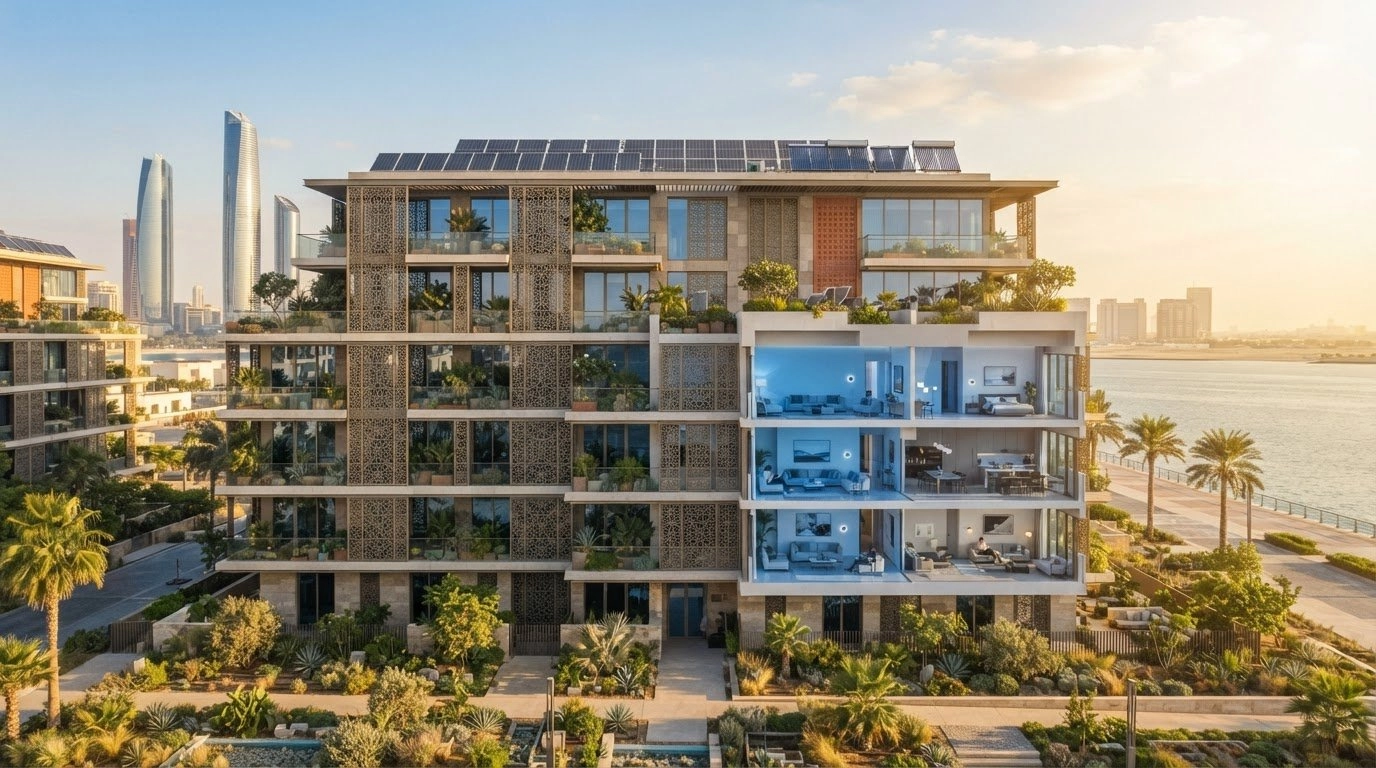
A green label doesn’t guarantee a cooler home, lower utility use, or better long-term performance. When comparing sustainable and green buildings in the UAE, look beyond the claim to how the property is designed, operated, and measured. In Abu Dhabi’s hot climate, cooling and water efficiency are especially relevant, and the details can shape everyday comfort as well as a building’s ongoing performance.
Terms such as “green,” “eco-friendly,” and “sustainable” can seem interchangeable, and ratings can be hard to compare. UAE requirements vary by emirate: Dubai’s Al Sa’fat Green Building System and Abu Dhabi’s Estidama Pearl Rating System each provide a local framework. But a rating alone won’t tell you everything about a home’s real-world performance.
This 2026 guide explains the design and operational features that support sustainability, outlines the UAE frameworks to know, and shows what evidence to look for when assessing a property. Use the practical questions about energy and water use, cooling, indoor comfort, and building upkeep to distinguish measurable performance from broad marketing language and make a more informed residential property decision.
Key Takeaways
• Assess sustainable and green buildings in the UAE across energy, water, materials, indoor comfort, and ongoing operation, not by a green claim alone.
• See how shading, building-envelope design, efficient cooling and smart controls can work together to support comfort and resource efficiency.
• Distinguish marketing language, design features, ratings and operational evidence when reviewing a property’s sustainability claims.
• Follow a practical sequence to assess a home, from its location and design to its ratings, operating information and management.
• Turn your priorities into a clear property brief that balances comfort, efficiency, documentation and long-term needs.
Table of Contents
• What makes a building sustainable in the UAE?
• How sustainable UAE buildings manage energy, water, and indoor comfort
• Green labels versus real performance: what UAE property claims mean
• How to assess a sustainable building before choosing a UAE property
• Finding a UAE home that aligns with your sustainability priorities
What makes a building sustainable in the UAE?
A sustainable building uses energy and water thoughtfully, supports healthy indoor conditions, and is designed and managed to perform well over time. In the UAE, that means looking beyond a single efficient feature or an attractive green label. A building’s performance depends on how its design, materials, systems, and day-to-day operation work together.
These factors are connected. Shading can reduce direct solar heat, easing the demand on cooling systems. Efficient cooling can help manage energy use, while well-maintained equipment and clear controls help sustain performance. Water-efficient fixtures matter, as does building management that identifies and addresses waste. Materials, ventilation, and filtration also influence durability and indoor conditions.
How UAE conditions shape sustainable building design
Strong sun exposure and high temperatures make solar control and cooling central design considerations. Building orientation, shaded windows, and an effective building envelope can limit unwanted heat gain. Cooling systems and controls then need to respond to the building’s actual conditions, not just its design specifications.
Water efficiency is equally relevant in an arid climate. Fixtures and landscape choices affect demand, while maintenance can help prevent avoidable losses. Dust also makes upkeep and indoor air management practical considerations for residents. The wider UAE context is visible in Masdar City, an Abu Dhabi urban development associated with sustainable design, energy and transport. This example, however, does not establish how an individual home performs.
What Estidama and Al Sa'fat tell property seekers
Local frameworks offer a useful starting point, but the applicable system depends on the emirate. Abu Dhabi’s Estidama Pearl Rating System assesses sustainability. New private residential developments are required to achieve at least 1 Pearl; government-funded buildings require at least 2 Pearls. In Dubai, Al Sa'fat is the municipal green-building system. Its mandatory baseline for new buildings is Silver Sa'fa, with Golden and Platinum Sa'fa as higher voluntary tiers.
A rating indicates that a project has been assessed against a framework. By itself, it doesn’t show how much energy or water a particular occupied home uses, how comfortable it feels, or how consistently its systems are maintained. When comparing sustainable and green buildings in the UAE, treat the rating as one piece of evidence, then look for relevant operational information and details about building management.
Keep the distinctions clear: a feature describes one design choice, a rating reflects assessment under a defined system, and operational evidence helps show how the building performs in practice. Together, these provide a stronger basis for evaluating a property than a label alone.
How sustainable UAE buildings manage energy, water, and indoor comfort
In the UAE, everyday comfort depends on how well a building’s systems work together. Shading and glazing influence how much heat enters; insulation can slow heat transfer; cooling equipment and controls respond to the remaining demand. If these elements are poorly matched, a building may use more energy or feel less comfortable than its design suggests.
Energy efficiency and cooling in the UAE climate
Consider the whole cooling chain. External shade can reduce direct sun on windows, while suitable glazing limits unwanted heat gain without sacrificing useful daylight. Insulation helps moderate heat transfer through the building envelope. Efficient cooling equipment then has less work to do, and well-set controls can respond to occupancy and conditions instead of cooling unused spaces unnecessarily.
Commissioning checks that building systems are installed and operating as intended. Controls also need to be understandable and maintained so residents and building managers can use them effectively. The World Green Building Council’s overview of sustainable design practices in the UAE connects design choices, materials and building decarbonisation. Actual results still depend on the property’s design, maintenance and how people use it.
Design sets the intention; measured operation shows how the building performs in daily life.
Water use, materials, and healthier indoor environments
Water performance involves more than the fixtures inside a home. Efficient taps, showers, and toilets can reduce demand, while landscape irrigation choices affect water use in shared outdoor areas. Leak monitoring and timely maintenance can help identify avoidable losses. These are useful factors to examine, but no single feature guarantees lower consumption across an entire building.
Materials matter throughout a building’s life. Durable selections can reduce the frequency of replacement and associated maintenance, while material sourcing and manufacturing also influence environmental impact. Look beyond a product label to consider where and how materials are used, how long they are expected to last, and what upkeep they require.
Indoor conditions count, too. Ventilation brings in and circulates air; filtration can help remove airborne particles when appropriately selected and maintained. In dusty conditions, the design and upkeep of these systems can affect indoor air quality. Their presence and performance vary between buildings, so look for evidence rather than assuming every property has the same provision.
For a residential search, compare these systems as a connected picture: cooling and controls, water use, materials, ventilation and maintenance. If you’re weighing comfort and resource priorities while exploring UAE homes with Oia Properties, focus on how the building is designed to operate, not just the features named in its marketing.
Green labels versus real performance: what UAE property claims mean
A property listing might call a home “eco-friendly,” highlight rooftop solar panels or display a green-building rating. These claims aren’t equivalent. Marketing language describes how a property is presented; a design feature identifies one element; a rating reflects assessment against a defined framework; operational evidence shows how the building performs in use.
That distinction matters when comparing sustainable and green buildings in the UAE. Solar panels or smart controls alone don’t make a building sustainable. Their contribution depends on the wider design, how the systems are configured and maintained, and how the building is occupied.
What a green-building rating can and cannot establish
Estidama’s Pearl Rating System applies in Abu Dhabi, while Dubai uses Al Sa’fat. They assess buildings under different local frameworks, so their ratings aren’t interchangeable. Abu Dhabi’s minimum rating for new private residential developments is 1 Pearl; Dubai’s mandatory baseline for new buildings is Silver Sa’fa. A rating indicates assessment against applicable criteria, but it doesn’t automatically reveal a home’s current utility use or day-to-day comfort.
There can also be a difference between a design-stage target and evidence for a completed building. Review the relevant rating documentation and note which stage it covers. Where available, completed-building records and operational data can add useful context.
Which evidence can support a sustainability claim?
Look for information that connects a claim to a specific building and a clear basis for assessment. Project specifications can show what was designed or installed; rating documents identify the framework and assessment; building-management information can explain how systems are operated and maintained. Energy and water performance data, when available, offer a practical view of resource use.
Promotional adjectives and illustrative images can communicate a property’s appeal, but they don’t substantiate performance. Prefer dated, building-specific documents over general statements, and check that the evidence relates to the property you’re considering.
Ratings assess defined criteria, while operating results depend on use and management. Keep both in view: a documented rating offers a structured reference, and operational information helps show how the building functions beyond its original design intent.
How to assess a sustainable building before choosing a UAE property
Use the same review for every property. This helps you compare homes on evidence rather than presentation, while keeping location, building design, and long-term operation in view. For sustainable and green buildings in the UAE, start with the context around the home, then examine what project documents and available records can tell you.
A five-step sustainability review for homebuyers
1. Start with location and building context. Consider your regular routes, access to public transport and everyday services, outdoor shade, and how the location fits your routine. In Abu Dhabi, think about how the home’s location affects your daily travel and access to the places you use.
2. Review the project’s stated rating. Identify the framework relevant to the emirate, the rating or target cited, and what the supporting documentation covers. Keep design-stage intentions distinct from completed-building records.
3. Examine the design information. Look for available details on shading, glazing, insulation and cooling, alongside water-efficient fixtures, irrigation choices, materials, ventilation and filtration. Focus on documented specifications rather than assuming a feature is present.
4. Look for operating evidence. For completed properties, available energy and water records can add context to the design claims. Read them alongside information on system maintenance and building management, rather than treating one figure as a complete verdict.
5. Compare like with like. Use the same criteria across homes of similar type and context. Separate installed or documented features from projected outcomes, broad marketing language and illustrative images.
Questions to consider for off-plan and completed homes
Off-plan buyers are assessing what is proposed, not a history of actual use. Review published specifications and stated performance commitments, noting which details describe planned features and which set measurable expectations. Consider how the design addresses cooling, water, materials, and indoor conditions, and how the building is intended to be operated.
For a completed home, operating information and management practices may add useful context. Look for records that relate to the building itself, and consider whether maintenance supports the systems described in its specifications. A rating is useful context, but it can’t replace evidence of day-to-day operation.
Finally, test the property against your routine. A shaded route to nearby services or convenient transport access may matter more to your daily choices than a feature you rarely use. Compare the home’s documented qualities with the comfort, location and resource priorities you’ll live with.
Finding a UAE home that aligns with your sustainability priorities
A strong property brief starts with your priorities, not a label. A home that suits your needs should balance everyday comfort, resource use, location, and the quality of information available about the building. Decide which factors matter most, then use the same criteria to compare suitable options in Abu Dhabi, Dubai or elsewhere in the UAE.
Turn sustainability priorities into a property brief
Rank your priorities before viewing homes. Cooling comfort may come first if you spend much of the day at home; efficient water use may be a key concern if your household is mindful of consumption. Location, access to daily services and transport, indoor conditions, and clear building documentation may also shape your decision.
• Comfort: Consider shade, cooling and indoor conditions that support your daily routine.
• Resource efficiency: Review available information about energy, water and landscape irrigation.
• Location: Think about transport access, nearby services and how often you’ll need to travel.
• Evidence: Note whether specifications, rating documents, or operating information support the property’s claims.
• Long-term management: Consider how building systems are maintained and how shared spaces are managed.
Use this list as a comparison tool, not a demand for a perfect score in every category. Compare documented features across homes that suit your budget, preferred location, and property type. Keep stated specifications separate from projected results, and note where information is unavailable so you can weigh uncertainty sensibly.
Your ownership plans matter. A homeowner may place daily comfort and household resource use at the top of the brief. A landlord may focus on maintainable systems and clear operating information. A long-term investor may also consider the building’s management approach and how its documented qualities fit a broader investment strategy. Priorities can overlap, but they don’t have to be identical.
Explore residential opportunities with informed guidance.
Bring your brief into the property search. Oia Properties supports residential sales and investment consultations in Abu Dhabi and Dubai, helping buyers connect their priorities with residential options. Sustainability criteria can inform that decision-making alongside the building-specific documents and performance evidence you use to assess a home.
Keep your shortlist focused on the right location, a comfortable everyday environment, clear information and a management approach that fits your plans. This makes it easier to compare properties on what matters to you, rather than being swayed by a broad “green” description.
Choose your next UAE home with confidence.e
When assessing sustainable and green buildings in the UAE, look past the label and consider the full picture: energy and water use, indoor comfort, building design and long-term management. Abu Dhabi’s Estidama and Dubai’s Al Sa’fat provide local assessment frameworks, while available operating information can help you understand how a property performs in practice.
Set your priorities before comparing homes. Decide what matters most for your lifestyle or investment plans, then weigh documented features, location, and management alongside any rating. A clear brief makes the search more focused and helps separate meaningful evidence from broad claims.
Oia Properties supports residential sales and investment consultations, with a presence in Abu Dhabi and Dubai. Explore UAE residential properties with Oia Properties and put your sustainability priorities to work in your property search.
Frequently Asked Questions
What is a green building in the UAE?
A green building is designed, constructed, and operated to use resources thoughtfully while supporting occupant wellbeing. In Abu Dhabi and across the UAE, relevant considerations include cooling and energy efficiency, water conservation, material choices, and indoor environmental quality. A rating can show how a project was assessed against defined criteria, but it doesn’t tell the whole story. When assessing sustainable and green buildings in the UAE, also consider building documents and available operating information.
What are the main green-building standards in the UAE?
The main emirate-level frameworks include Abu Dhabi’s Estidama Pearl Rating System and Dubai’s Al Sa’fat Green Building System. Abu Dhabi’s new private residential developments require at least 1 Pearl, while Dubai’s mandatory baseline for new buildings is Silver Sa’fa. Requirements and terminology can change, so review the relevant emirate’s current framework and the specific project’s rating documents before relying on a sustainability claim.
Are green buildings common in the UAE?
Green-building frameworks and sustainability measures are part of the UAE’s built environment, but what a particular home delivers varies by project, location, and building age. A broad market claim won’t establish whether an individual property performs well. In Abu Dhabi, review the project’s Estidama rating and supporting information; for a completed home, consider available operating records alongside its specifications and management approach.
Do green buildings use less energy in the UAE?
Efficient design and systems can help reduce energy demand, particularly for cooling, but no label or single feature guarantees a specific result. Performance depends on the building envelope, cooling equipment, controls, maintenance, and how residents use the home. For an Abu Dhabi property, look for relevant project documentation and available energy-use information. Comparing homes of a similar type and context makes the evidence more meaningful.
What is the difference between Estidama and Al Sa’fat?
Estidama’s Pearl Rating System is Abu Dhabi’s sustainability framework, while Al Sa’fat is Dubai’s green-building system. They are separate frameworks with distinct criteria and rating terminology, so a Pearl rating shouldn’t be treated as equivalent to a Sa’fa tier. For a property in Abu Dhabi, identify its Estidama rating and the scope of its documentation. Review the applicable framework and current requirements for the specific development.
Are off-plan properties in the UAE sustainable?
Some off-plan developments describe sustainability measures in their specifications or marketing, but a new building isn’t automatically sustainable. Review the stated rating framework, published design specifications, and any documented performance commitments. Separate planned features from results measured after occupancy. For an Abu Dhabi off-plan home, identify the stated Estidama rating or target and what the available project documents cover, rather than relying on promotional descriptions alone.
What should I check before buying a sustainable home in the UAE?
Start with the property’s rating and the scope of its supporting documents. Then review available details on cooling, energy, water, materials, indoor conditions, and building management. For an off-plan home, focus on published specifications and stated commitments; for a completed property, consider available operating information and maintenance practices. In Abu Dhabi, review the relevant Estidama documentation. Compare evidence across suitable homes, not just environmental claims.
