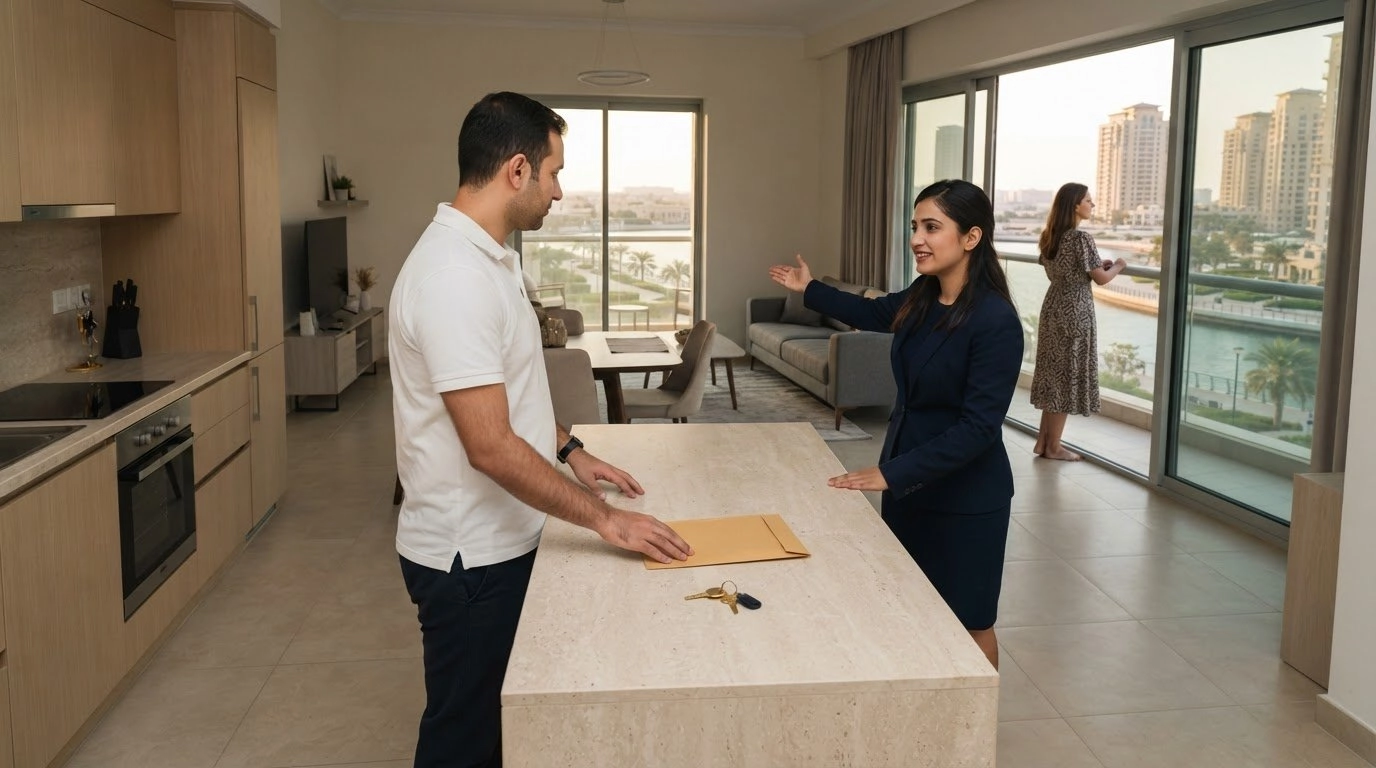
A personal loan is not a safe shortcut to a UAE home deposit. UAE banks generally don’t allow buyers to use personal-loan funds for a property down payment. For an expatriate resident buying a first property under AED 5 million, the typical down payment is 20% of the purchase price. Saving for a down payment on a house in the UAE starts with understanding your buyer profile and setting a realistic cash target.
The deposit isn’t the only amount to plan for. Buyers should budget roughly 6-7% of the property price for additional closing costs, on top of the down payment. Your target also depends on the property price, purchase history, and whether you’re considering a ready or off-plan home.
This guide examines Abu Dhabi and Dubai separately, covering local areas, developers, projects, regulations and market data. It also explains how to estimate your savings goal, set a monthly target, and compare lower-risk places to hold your funds. With a clear plan for saving for a down payment on a house in the UAE, you can assess homes in either city against your budget and timeline.
Key Areas in Abu Dhabi Real Estate
In Abu Dhabi, buyers can compare established urban districts with island communities and suburban neighbourhoods. Al Maryah Island offers a city-centre setting, while Saadiyat Island and Yas Island have distinct island environments. Each location has its own mix of homes and surroundings, so compare available properties rather than choosing by reputation alone.
Al Reem Island may suit buyers seeking an urban residential setting close to central Abu Dhabi. Khalifa City offers a more suburban environment and may appeal to those prioritising a quieter residential setting. Al Raha Beach provides a coastal option. The right fit depends on the home you want and the places you need to reach regularly.
Use location as a practical filter. Consider your preferred setting, regular travel, nearby amenities, and the property type you want. Then assess individual homes in areas that match those priorities. District descriptions can narrow the search, but properties in the same area may differ in layout, surroundings, and access. A focused shortlist keeps your search aligned with your lifestyle and purchase plans.
In Abu Dhabi, you’ll find developers behind large master-planned communities as well as companies focused on individual residential projects. Their portfolios may include apartments, townhouses, and villas. Compare the homes currently available with your shortlisted location and property type. A familiar developer name alone does not mean a particular project suits your budget or plans.
For each development, review the payment schedule alongside the advertised purchase price. An off-plan home may have instalments tied to construction milestones, while a completed property follows a different purchase process. Understand when payments fall due and whether the schedule fits your savings horizon before committing. The deposit is only part of your cash plan: timing matters too.
Assess the project’s location, property mix, stated handover details, and sale-document terms. Compare similar homes across developers, including layout and practical setting, rather than relying on promotional language. If you are considering several properties as part of a wider portfolio, real estate portfolio management can help you assess how the assets fit together. Keep your comparison focused on the specific Abu Dhabi development and its payment commitments, not assumptions based on a developer’s other projects.
Notable Abu Dhabi Real Estate Projects
Project names can turn a broad location search into a focused shortlist. In Abu Dhabi, buyers may consider Saadiyat Lagoons on Saadiyat Island, Yas Acres on Yas Island and Reem Hills on Al Reem Island. Each has a distinct setting, so compare the specific homes available rather than assuming every property in an island community has the same character or purchase terms.
AlJurf is another named development to consider when exploring residential options in the emirate. Its coastal setting differs from city-centre apartment communities. For any project, look beyond the name: identify whether the home is an apartment, townhouse or villa, and consider how the location fits your routine, preferred surroundings and longer-term plans.
Project status also affects the buying decision. A completed home and an off-plan property may have different payment timing and purchase processes. Review the individual unit’s sale terms and payment schedule, then align those commitments with your savings plan. Compare projects using practical criteria: property type, location, current stage, and obligations in the sale documents. This keeps your decision grounded in the actual home, not just a project’s name.
Abu Dhabi Real Estate Laws and Regulations
For Abu Dhabi buyers, UAE mortgage requirements depend on residency, property value, and purchase history. Expatriate residents typically need 20% down for a first property under AED 5 million. UAE national residents can have a maximum loan-to-value ratio of 85% on a first property below AED 5,000,000. Non-residents need a minimum of 25%, though many deals require around 50%. Off-plan purchases generally require about 50%. These profiles shape your target when saving for a down payment on a house in the UAE.
Second-property requirements can be higher. A resident’s maximum loan-to-value ratio is typically 5 to 10 percentage points below the first-property tier. Buyers should also budget approximately 6-7% of the property price for additional closing costs. Mortgage registration costs are around 0.25% of the loan amount, plus an administrative fee; arrangement and valuation costs also contribute to upfront cash needs.
What are UAE mortgage loan-to-value limits for first-time buyers and non-residents? Resident first-time buyers may access higher loan-to-value bands, while non-resident limits depend on the property and lender. What are typical UAE mortgage rates, terms, and monthly payments? An illustrative example uses annual interest of 3.89% over 25 years; the monthly payment depends on the loan amount and interest terms. Use these figures to refine your plan for saving for a down payment on a house in the UAE.
Abu Dhabi Market Reports and Real Estate Data
Use Abu Dhabi market reports to assess whether an asking price aligns with recent activity for comparable homes. Focus on transaction prices, completed sales, and the differences between apartment and villa segments. Asking prices reflect seller expectations; recorded transactions offer a clearer reference for what buyers have paid. Compare homes with similar locations, layouts, and condition rather than relying on emirate-wide averages.
Read supply and demand indicators alongside prices. New project launches, available listings, and sales activity can show how much choice buyers have in a particular segment. Check the report’s publication period and methodology before relying on a trend. City-wide figures may hide differences between communities or property types, so use the most relevant local comparison available.
Use comparable transaction data to test your property budget, then calculate the minimum down payment and purchase costs for that target. Revisit the estimate as your shortlist changes. If a report covers off-plan sales, separate them from ready-home sales because their payment schedules differ. Treat market data as a planning tool, not a promise about a property’s value or future resale price.
Key Areas in Dubai Real Estate
Dubai’s residential districts offer distinct settings. Downtown Dubai and Business Bay provide central urban options, while Dubai Marina and Jumeirah Beach Residence offer a waterfront setting. Compare individual homes and their surroundings, not just district names. A central apartment and a coastal residence may suit different routines, even if both appeal to buyers seeking a city lifestyle.
For a more residential feel, consider Dubai Hills Estate, Arabian Ranches and Jumeirah Village Circle. These areas offer alternatives to the high-rise character of central districts. Palm Jumeirah stands apart for its island setting. Focus on the property type available, the routes you expect to travel and the amenities that matter to your household.
Build a shortlist around daily priorities: preferred setting, commute, home type and access to places you use regularly. Then compare individual properties in those areas against your purchase plans. A district’s profile can narrow the search, but it cannot replace a close look at the home and its surroundings. This location-first approach gives your Dubai search direction without treating every property in an area as interchangeable.
Real Estate Developers in Dubai
Dubai’s developers include companies delivering large master-planned communities, and firms focused on individual residential buildings. Compare them through the specific property on offer: its location, type, construction stage, and payment schedule. A developer’s broader profile can provide context, but the project documents set out the commitments attached to your purchase.
Off-plan terms deserve close attention. A typical booking payment may be 10-20% of the property price, while some projects offer initial payments as low as 5%.
Construction-linked instalments and handover payments shape how much cash you need, and some post-handover plans spread part of the balance over 1-5 years.
These structures change payment timing, not the need to understand the full amount due.
Review instalment milestones against construction progress. Check the project documents to confirm how construction-linked payment milestones are verified for off-plan purchases. Read the sale agreement for payment dates, handover terms, and the consequences of missed instalments. Compare similar homes across developers, including ready properties and off-plan units, rather than judging a project by a headline payment alone. A disciplined review connects the developer’s schedule to your savings runway and makes each commitment visible before you proceed.
Notable Dubai Real Estate Projects
Dubai’s named developments offer useful reference points for comparing residential settings. Emaar Beachfront is a waterfront project, while Dubai Creek Harbour is a large-scale district by the creek. Dubai Hills Estate offers another master-planned community. Compare the specific homes available, not just the wider project identity. A development can include different property types and settings, so the individual unit matters.
Use project names to organise your shortlist, then assess the factors that affect your purchase: property type, location, completion status and sale terms. A completed apartment and an off-plan home within a major development, for example, may have different payment timings. Review the unit’s documents and schedule before deciding whether the purchase fits your savings horizon. Project branding alone does not show the total cash you’ll need.
Keep your comparison practical. Match each home to your preferred area, daily routine, and intended use. Compare similar properties across developments, and separate ready homes from off-plan options when setting a budget. Revisit your target if your shortlist or payment structure changes. This project-by-project approach turns Dubai’s broad choice of developments into a disciplined buying plan based on the actual unit and its terms, not a name alone.
Dubai Real Estate Laws and Regulations
Dubai down-payment requirements vary by residency, property value, and purchase history. For a first property below AED 5 million, expatriate residents typically need 20% of the price; UAE nationals need at least 15%. For a Dubai property above AED 5 million, UAE nationals need at least 30%. A second property requires at least 40% for UAE nationals and 45% for non-UAE nationals. Non-residents need a minimum of 25%, though many mortgage deals require around 50%.
Budget for costs beyond the deposit. The Dubai Land Department transfer fee is 4% of the property price, and overall transaction costs are roughly 7-8%. Mortgage registration costs are around 0.25% of the loan amount, plus an administrative fee; bank arrangement fees commonly range from 0.5%-1%. A 10% security deposit cheque is typically given when signing Form F and counts toward the down payment.
For example, an expatriate buying a first Dubai home should plan for a cash target of roughly 28% of the property price, covering the deposit and transaction fees. Keep funds accessible for costs due during the purchase, and account for the bank’s valuation, which may be below the agreed price. That difference must be covered in cash.
Dubai Market Reports and Real Estate Data
Use Dubai market reports to base your property budget on recorded activity, not asking prices alone. Compare completed transaction prices with current listings, and separate apartments from villas and townhouses. A premium apartment and a family villa belong to different segments, so broad averages may not reflect your shortlist. Check the report’s coverage period and whether its figures describe sales, listings, or rental activity.
Study transaction volumes alongside price movements. More recorded sales can indicate stronger activity, while new launches and available listings help show the choice buyers face. Separate ready-property transactions from off-plan sales because their payment schedules and purchase stages differ. When estimating a target, use data for the relevant property type and location rather than relying on a Dubai-wide trend.
Turn the comparison into a practical savings step: select comparable homes, establish a realistic price range, then calculate the deposit and buying costs against your timeline. Update the estimate as your shortlist changes. Treat market data as context, not a guarantee of future prices or resale values. Considering the segment, location, and transaction type makes the figures more useful for planning a Dubai purchase.
Oia Properties
Oia Properties can help you move from a savings target to a focused property search. Once you’ve estimated your deposit and purchase costs, compare homes that fit your budget, preferred location and plans. Oia Properties offers apartments, villas and townhouses for sale, as well as off-plan property investments. These options give buyers different property types and purchase paths to consider.
Turn your target into practical search criteria. Decide which property types suit your household, which areas you want to explore and whether you’re considering a completed home or an off-plan purchase.
A clear shortlist helps you compare relevant properties while keeping the funds you’re saving for the purchase in view.
Oia Properties is a natural next step when you’re ready to explore homes and investment options across Abu Dhabi. Share the property type and locations you’re considering, along with your preferred purchase timeline, to focus your search on options that match your priorities. Keep your savings plan and each property’s payment terms in view, especially when comparing different property types or purchase stages.
Contact Oia Properties to discuss your property search when you’re ready.
Frequently Asked Questions
Can I use a personal loan to cover my down payment?
Generally, no. UAE banks generally don’t allow buyers to fund a property down payment with a personal loan. Borrowing can also affect how a lender assesses your existing commitments and mortgage affordability. Keep deposit funds traceable, and be prepared to explain large deposits if asked during source-of-funds checks. A clear record of accumulated savings helps show where your purchase funds came from.
How Much Down Payment Do You Need to Buy Property in the UAE?
It depends on residency, property value, purchase history, and whether the property is ready or off-plan. Expatriate residents typically need 20% for a first property below AED 5 million, while non-residents need at least 25%. Off-plan purchases may require around 50%. A second purchase can require more than a first, so calculate your target using your buyer profile and the specific property.
How much down payment do you need for a UAE mortgage?
For a first property below AED 5 million, expatriate residents typically put down 20%; UAE national residents can have a maximum loan-to-value ratio of 85%. Non-residents need a minimum 25%, though many mortgage deals require around 50%. These are different buyer profiles, not interchangeable estimates. For example, a resident buying a first home should use the resident tier, then account separately for transaction costs.
Do gifted funds from family count toward my down payment?
UAE banks typically accept a documented gift from an immediate family member as down-payment funds, usually supported by a signed gift letter. Keep records showing the source and transfer of the gift rather than depositing cash without an explanation. The bank may review the funds as part of its source-of-funds checks. A gift differs from a personal loan, which banks generally don’t allow buyers to use for the deposit.
Does a larger down payment get me a better interest rate?
It can help with mortgage pricing, but the effect depends on the lender and loan details. Some UAE banks may offer improved pricing when the loan-to-value ratio falls below 60%. A larger contribution reduces the amount borrowed, but it also ties up more cash at purchase. Compare the overall borrowing terms and keep enough liquid savings for transaction costs and other planned expenses.
Is the down payment negotiable with the bank?
The required contribution depends on mortgage limits and the bank’s assessment, including residency, property value and whether you already have a mortgaged property. Don’t assume the bank will accept a smaller deposit simply because you request one. Ask for the loan-to-value calculation and how the property valuation affects it. If the valuation is below the agreed price, you may need extra cash to cover the difference.
What Is a Down Payment and Why Is It Important?
A down payment is the portion of a property’s price you pay from your own funds rather than borrowing through a mortgage. It determines how much you need to save before buying and how much you’ll finance. For planning, keep the deposit separate from transfer, registration, and other purchase costs. This clarifies your cash target and reduces the risk of overlooking expenses due at completion.
What Is a Down Payment, Exactly?
It’s the buyer’s upfront contribution toward a property purchase. The mortgage covers the remaining financed portion, subject to the lender’s approval and applicable loan-to-value limits. For example, on an AED 1,500,000 property, a resident needing a 20% deposit would contribute AED 300,000 toward the price. That figure represents the down payment only, not additional transaction costs or other cash required to complete the purchase.
.svg)





 English
 العربية