.svg)





 English
 العربية

How to Sell Property in UAE: A Clear Guide for 2026
- October 22, 2026
- /
- Buyer and Seller Guides
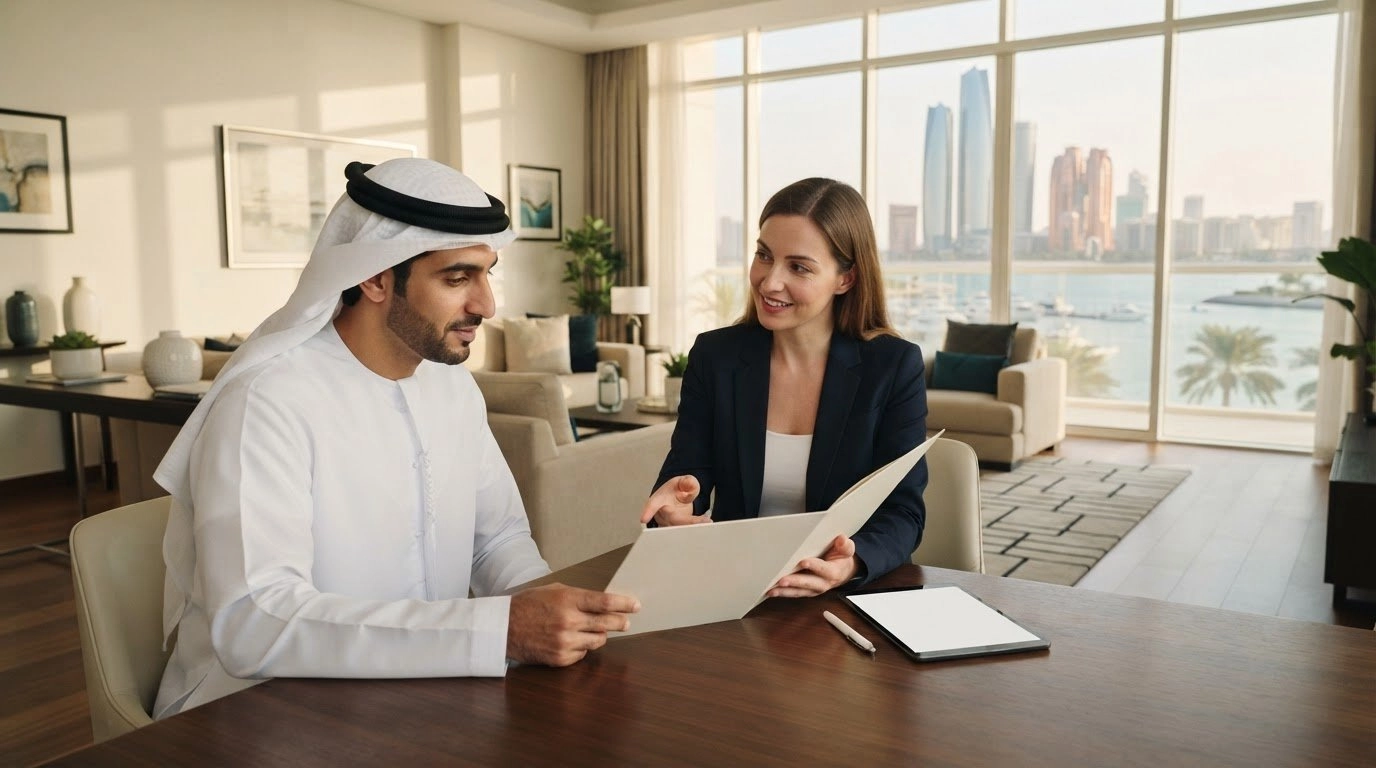
A strong UAE property sale starts before the first viewing. If you’re wondering how to sell property in the UAE, begin by setting a realistic asking price, preparing the home, and understanding which documents and steps apply to your sale.
The process can vary by emirate and by whether you’re selling a completed home or an off-plan property. A clear plan helps you present the property, manage enquiries and viewings, assess offers, and prepare for transfer without losing sight of the details that matter.
This guide takes you through the main stages, from valuation and presentation to marketing, negotiations, paperwork, and completion. It also explains how location and sale route can shape the process. Oia Properties is an award-winning real estate agency serving Abu Dhabi and Dubai, supporting sellers with valuations and sales representation. Our relationship-led approach keeps your priorities, property, and community in focus as you make decisions.
Key Takeaways
• Learn how to sell property in the UAE by setting clear priorities for timing, involvement, and sale readiness.
• Build an asking-price strategy around the property’s features, local market evidence, and community appeal.
• Understand the difference between agency-supported sales and the Dubai Now route, including the latter’s eligibility conditions.
• Organise documents and transfer steps while allowing for differences between emirates and property circumstances.
• See how Oia Properties can support valuation and sale decisions with award-winning, relationship-led guidance.
Table of Contents
• How to Sell Property in UAE: Start with Your Goals and Sale Readiness
• Set a Credible Asking Price and Present Your UAE Property Well
• Compare UAE Property Sale Routes Before Accepting an Offer
• Follow the UAE Property Sale Process from Documents to Transfer
• Sell with Oia Properties: Turn Your Plan into a Supported Next Step
How to Sell Property in UAE: Start with Your Goals and Sale Readiness
Selling a home involves more than choosing an asking price. Your preferred timing, the property’s occupancy, your flexibility during negotiations, and the steps that apply in its emirate all shape the plan. Before listing, define what a successful sale looks like for you. Clear priorities make it easier to assess offers and decide which terms matter most.
Start with your reason for selling. Are you moving, releasing capital, or adjusting your property portfolio? Separate your non-negotiables from your preferences. You might have a preferred completion period but be flexible about viewing arrangements, or prioritise particular terms over speed. This gives you a practical foundation for how to sell property in the UAE in a way that fits your circumstances.
Clarify your sale priorities before listing
Decide who will coordinate enquiries, arrange access, and keep you updated on offers. If you live in the property, plan how viewings can fit around your household. If it’s tenanted, vacant, or used occasionally, access arrangements can affect when and how it is presented. Establish these details before setting expectations with prospective buyers.
• Timing: Identify any dates that matter and where you can allow flexibility.
• Transaction priorities: Decide which terms matter most, such as certainty, timing, or flexibility during the handover.
• Preparation: Assess the property’s condition and note what needs attention before photography and viewings.
• Involvement: Choose how you want to handle access, enquiries, and updates throughout the sale.
Consider the home from a buyer’s perspective. A tidy, accessible space helps buyers understand the layout and picture daily life there. Identify what makes the property and its community appealing, then make those qualities easy to see during viewings.
Identify the emirate and ownership details that shape the process
Record the property’s exact emirate and community, then clarify its ownership status. Is it held by one person, jointly, or through a company? Is it a completed home or an off-plan property? These details can affect the sale route and the coordination involved, so establish them before setting expectations with buyers.
Registration and transfer procedures are not one UAE-wide checklist. Dubai transactions involve the Dubai Land Department (DLD), while Abu Dhabi has its own applicable authority and processes. Requirements may also depend on the property and ownership circumstances. Treat a general checklist as a starting point, then verify the current steps with the authority responsible for the property.
Sale readiness means preparation, positioning, and process planning. Set your priorities, plan how the property will be accessed and presented, and identify the location-specific steps to confirm. With these foundations in place, you can make pricing and marketing decisions with greater confidence.
Set a Credible Asking Price and Present Your UAE Property Well
A credible asking price starts with evidence, not a guess or an emotional attachment to the property. Buyers compare homes by location, condition, layout, size, and overall value. Look for reference properties that genuinely resemble yours. A polished presentation can attract interest, but it cannot make up for a price that ignores comparable options nearby.
An asking price is your opening position in the market, not a guaranteed final sale price. The eventual outcome depends on buyer interest, negotiations, and the terms agreed between the parties. Treat pricing as an informed decision that can be reviewed in response to market feedback.
Build a pricing view around the individual property
Start with the property’s type, size, condition, layout, and precise location. Compare it with relevant listings in the same community or a closely comparable area. Look beyond headline prices: a renovated home and one requiring attention may attract different buyers, even within the same building or street. Layout, outlook, access, and community setting can also affect how buyers assess value.
Use comparable listings as context, not as proof that your property will sell for the same amount. An advertised price shows a seller’s current asking position, not a completed sale price. A property valuation brings the relevant factors together into a reasoned assessment, but it is guidance rather than a promise of the final result. Oia Properties supports sellers with property valuations, helping you consider your home’s individual qualities alongside local evidence.
If you’re considering how to sell property in the UAE, assemble accurate property information before deciding on a marketing position. Confirm the details you’ll use consistently, including property type, size, layout, condition, and location. This gives buyers a clear basis for comparison and helps prevent confusion later in the process.
Make the listing accurate, polished, and buyer-focused
Strong presentation helps prospective buyers understand both the home and the lifestyle its location may offer. Use clear photography that represents the property honestly. Keep rooms orderly, make the layout easy to understand, and describe the home in direct, specific language. Avoid claims that the property or a viewing cannot support.
• Lead with useful facts: Explain the layout, property type, condition, and confirmed features.
• Describe the setting: Give relevant community and location context without overstating what’s nearby.
• Keep every detail consistent: Check that the listing, viewing information, and documents use matching, accurate details.
• Show the home clearly: Choose photography that helps buyers assess the spaces without misleading edits or angles.
Buyer perception is shaped by more than finishes. A practical layout, the feel of the community, and the property’s location can all contribute to its appeal. Present those strengths accurately. Sellers looking for valuation and positioning support can explore Oia Properties’ property valuation support as they prepare for the next steps.
Compare UAE Property Sale Routes Before Accepting an Offer
A digital service can make parts of a transaction more convenient, but it may not suit every seller or property. The available route depends on the property’s jurisdiction and circumstances. In Dubai, Dubai Now is a specific route described by the Dubai Land Department (DLD), with eligibility conditions. Agency-supported sales offer a different kind of support, focused on preparing and managing the sale journey. Compare what each route covers before deciding how to proceed.
What the Dubai Now route covers, and where its limits apply
The DLD-described sequence includes creating a sale request, signing the generated sale and purchase agreement (SPA), transferring the purchase amount and service fees to an escrow account, and then viewing the issued title deed and receipt. Stated conditions include holding a UAE ID, a property free of restrictions and mortgages, location in a freehold area, and a subdivided unit (DLD lists apartments, offices, and townhouses). These are conditions for this particular service, not a checklist for every property sale in the Emirates. Before relying on this route, verify the latest eligibility criteria, required documents, and service terms on the official DLD service page.
A digital process is not automatically the simplest choice. If the property falls outside the service criteria, or your circumstances call for more hands-on coordination, another applicable route may be needed. Don’t assume that a process described for Dubai applies in Abu Dhabi or elsewhere. Confirm the responsible authority and current procedure for the property’s emirate.
When agency support can make the sale journey clearer
Agency support can bring together decisions that arise before and during a sale. Oia Properties supports sellers with valuations and sales representation, including guidance on marketing the property, managing buyer enquiries, and considering offers. This can be useful if you want a clear point of coordination while staying involved in decisions about price, terms, and next steps.
A digital service describes a transaction route, while agency support can help you prepare and manage the sale around that route. The right approach depends on your property, priorities, and jurisdiction. Understanding those factors is central to how to sell property in the UAE without mistaking one emirate’s service conditions for a nationwide process.
Follow the UAE Property Sale Process from Documents to Transfer
Once buyer and seller agree on terms, the sale moves into document checks, transaction paperwork, and registration. The sequence depends on the emirate, property type, ownership structure, and circumstances such as an outstanding mortgage or a representative acting for the owner. Use the steps below to organise the work, not as a universal legal checklist. Confirm the applicable requirements for your property before signing or arranging the transfer.
Prepare ownership and transaction information
Gather your ownership records and make sure the property details you share match the available documents. Examples may include a title deed, identification, developer-related paperwork, or authority-specific forms, but requirements differ. Flag any mortgage, restriction, joint or company ownership, or overseas owner using a representative early. These circumstances can affect the evidence, approvals, or authorisations required.
1. Confirm the jurisdiction and ownership record. Identify the emirate and the authority responsible for registering the transfer. Check the ownership details, property description, and owner names for accuracy.
2. Identify circumstances that may affect the sale. Note any mortgage, ownership restriction, developer involvement, or representative acting for the seller. Establish which related information or approvals the relevant authority requires.
3. Organise the buyer and offer details. Keep the agreed price, conditions, parties’ details, and timing arrangements together. Make sure the written terms reflect what both sides have accepted.
4. Prepare the applicable transaction agreement. The relevant agreement and signing process depend on the jurisdiction and sale route. Read the terms carefully and resolve discrepancies before proceeding.
5. Complete the authority’s transfer requirements. Follow the registration, document-submission, and payment arrangements specified for the property. Keep copies of submitted paperwork and confirmations.
6. Confirm completion and retain records. Keep the final transaction documents and registration confirmation together. Make sure both parties understand any agreed handover arrangements.
Coordinate offer documents, transfer, and completion
An accepted offer is a key milestone, not the end of the process. Keep communications, document versions, agreed terms, and outstanding actions organised in one place. This makes it easier to track what has been agreed and what remains before registration. If details change, ensure everyone is working from the updated terms rather than an earlier draft.
The Dubai Land Department’s Dubai Now route provides a Dubai-specific example: its published process includes a sale request, a sale and purchase agreement (SPA), payment into an escrow account, and issue of the title deed. Those steps describe that service, not a universal procedure for all UAE sales. Check the current Dubai Now conditions where relevant, and follow the applicable process in other emirates.
Before proceeding, verify transfer requirements with the authority responsible for your property’s emirate. For support with valuation and residential sale decisions, speak with Oia Properties about selling your property.
Sell with Oia Properties: Turn Your Plan into a Supported Next Step
A property sale is a major decision, and clear guidance can make the choices ahead easier to manage. Oia Properties is an award-winning real estate agency serving Abu Dhabi and Dubai. Its relationship-led approach supports sellers as they consider valuation, marketing, and decisions involved in a residential sale. You remain in control of your priorities while getting support to assess the next move.
What seller support can look like with Oia Properties
Support can begin with a property valuation and continue through sales representation. A valuation helps you form a considered view of your home, but it is not a promise of a particular sale price. From there, guidance can help you think through how to position the property and weigh decisions as buyer interest develops.
Local context matters. A home in Abu Dhabi and one in Dubai may be subject to different authority processes, and buyer priorities can vary by property and community. Oia Properties’ presence in both emirates allows sellers to discuss their property in its local context, including Abu Dhabi, without assuming the same transaction route applies everywhere. The focus is practical support grounded in your home, priorities, and local market.
This support can help when you’re balancing preferred timing, how the property is presented, and how to respond to an offer. Your circumstances remain central. No valuation or sales guidance can guarantee a final price or completion date, but an informed discussion can help you make decisions with greater clarity.
Choose a clear next step for your sale
Start with a concise picture of the property and what you want from the sale. Share its emirate and community, property type, occupancy status, and key ownership circumstances. Add your priorities, such as preferred timing and how involved you want to be. These details help shape a focused conversation about valuation and the decisions ahead.
If you’re still working out how to sell property in the UAE, you don’t need every detail settled before taking the first step. Oia Properties can help you consider the next decisions, from understanding the property’s position to planning how to move forward. The approach is personal and measured, with no promise of a particular outcome.
Our promise is captured in the exact words: Let Our Family Show Your Family the Way Home. To discuss your property and priorities, connect with Oia Properties by Email, Call, or WhatsApp.
Discuss selling your property with Oia Properties
Take the Next Step Toward Your Property Sale
A property sale can mark the start of a new chapter. Let your next decision reflect what matters most to you. Clear priorities and the right guidance can turn a complex decision into a manageable plan.
If you’re considering how to sell property in the UAE, focus on progress rather than waiting for every detail to feel perfect. A conversation about your property and intentions can help bring the next choices into focus, without committing you to an outcome before you’re ready.
Frequently Asked Questions
Can I sell property in the UAE if I live overseas?
Yes, an overseas owner can begin planning a sale without assuming every step can be completed remotely. To understand how to sell property in the UAE from abroad, gather ownership information and identify the property’s emirate and likely transaction route. Find out which identity checks, signatures, or representation arrangements apply to your circumstances. If appointing someone to act for you, confirm the authority’s current requirements for that arrangement before making plans or signing documents.
Can I sell my UAE property while a tenant is living in it?
Yes, a property may be considered for sale while it’s tenanted, but the tenancy and sale arrangements need to follow the applicable agreement and local requirements. In Dubai, a change of ownership does not by itself end a fixed-term tenancy; the buyer generally steps into the landlord’s role. Gather the current tenancy documents and clarify how access can be arranged before marketing or booking viewings. Agree on a workable viewing process with the relevant parties. Don’t advertise vacant possession unless your circumstances and contractual terms support it.
How much does it cost to sell a property in the UAE?
There isn’t one cost figure that applies to every UAE property sale. Expenses depend on the emirate, transaction route, property circumstances, and agreements involved. Before proceeding, get a clear breakdown of charges relevant to your transaction, and check current government or service fees with the responsible authority. Generic online estimates aren’t a property-specific quote. Keep the breakdown with your sale documents so you can compare it with the agreed terms.
Do I need to travel to the UAE to sell my property?
Not necessarily, but whether you need to be physically present depends on the property’s emirate, transaction route, identity requirements, and any representation arrangements. Some steps may be available through digital services, though eligibility isn’t universal. Before booking travel or relying on a remote process, confirm the current requirements for your transaction. An agency can help explain the sale journey and coordinate communications, while the relevant authority’s requirements determine what must happen.
What happens if a buyer withdraws after signing the sale agreement?
The consequences depend on the agreement’s wording, the stage of the transaction, and the applicable rules. Don’t assume a deposit will automatically be retained or refunded, or that cancellation has no consequences. Review the signed terms promptly and get guidance specific to the transaction. Keep copies of notices, messages, and payment records, and note when each communication was sent. Confirm the appropriate next steps with the relevant authority or a qualified transaction professional.
Is Dubai Now available for every UAE property sale?
No. Dubai Now is a Dubai-specific digital service with conditions described by the Dubai Land Department, including holding a UAE ID, a property free of restrictions and mortgages, a freehold-area location, and a subdivided unit such as an apartment, office, or townhouse. These conditions aren’t a universal checklist for every UAE sale. Check the latest service terms to see whether a particular seller and property qualify. If they don’t, the transaction must follow the applicable process for that property and its jurisdiction.
