.svg)

 English
 العربية

The Sea View Effect: What Psychology and Real Estate Research Really Show
- December 14, 2025
- /
- Buyer and Seller Guides
What Science Says About Waterfront Homes
Put two almost identical apartments side by side:
Same building
Same layout
Same finishes
One looks over a car park and other towers.
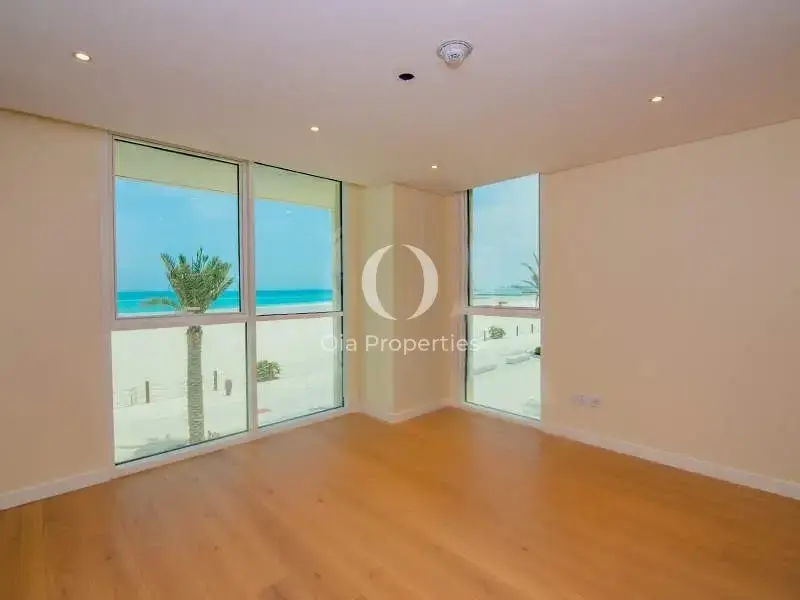
The other opens onto a wide, calm sea view.
In most markets, the second one is much more expensive.
Developers explain it with words like “luxury”, “prestige”, “exclusive lifestyle”.
But underneath the marketing, there is a more basic question:
Why does your brain fall in love with water and open views so quickly – and why do buyers keep paying extra for it?
In this article, we will:
Look at how our brains react to certain landscapes
Walk through a few key scientific studies (in plain language)
See how these findings show up in today’s sea-view prices
End with some Abu Dhabi examples where this “sea view effect” is especially strong
1. Why sea views feel “right” to our brains
Our nervous system is very old. Towers, mortgages and masterplans are very new.
For most of human history, staying alive depended on choosing the right places: where you could find water, see danger in time, and still have somewhere safe to rest.
Two ideas from environmental and evolutionary psychology help explain why a sea view often feels so good.
Savanna-style landscapes
The Savanna Hypothesis suggests that our preferences for certain landscapes were shaped when humans evolved on African savannas. We tend to like scenes that look:
Open, with medium-distance views
Dotted with some trees or shelter
Close to visible water
Neither too chaotic nor too empty
In experiments where people from different countries rate images of different landscapes, “park-like” or savanna-like scenes with water often come out on top.
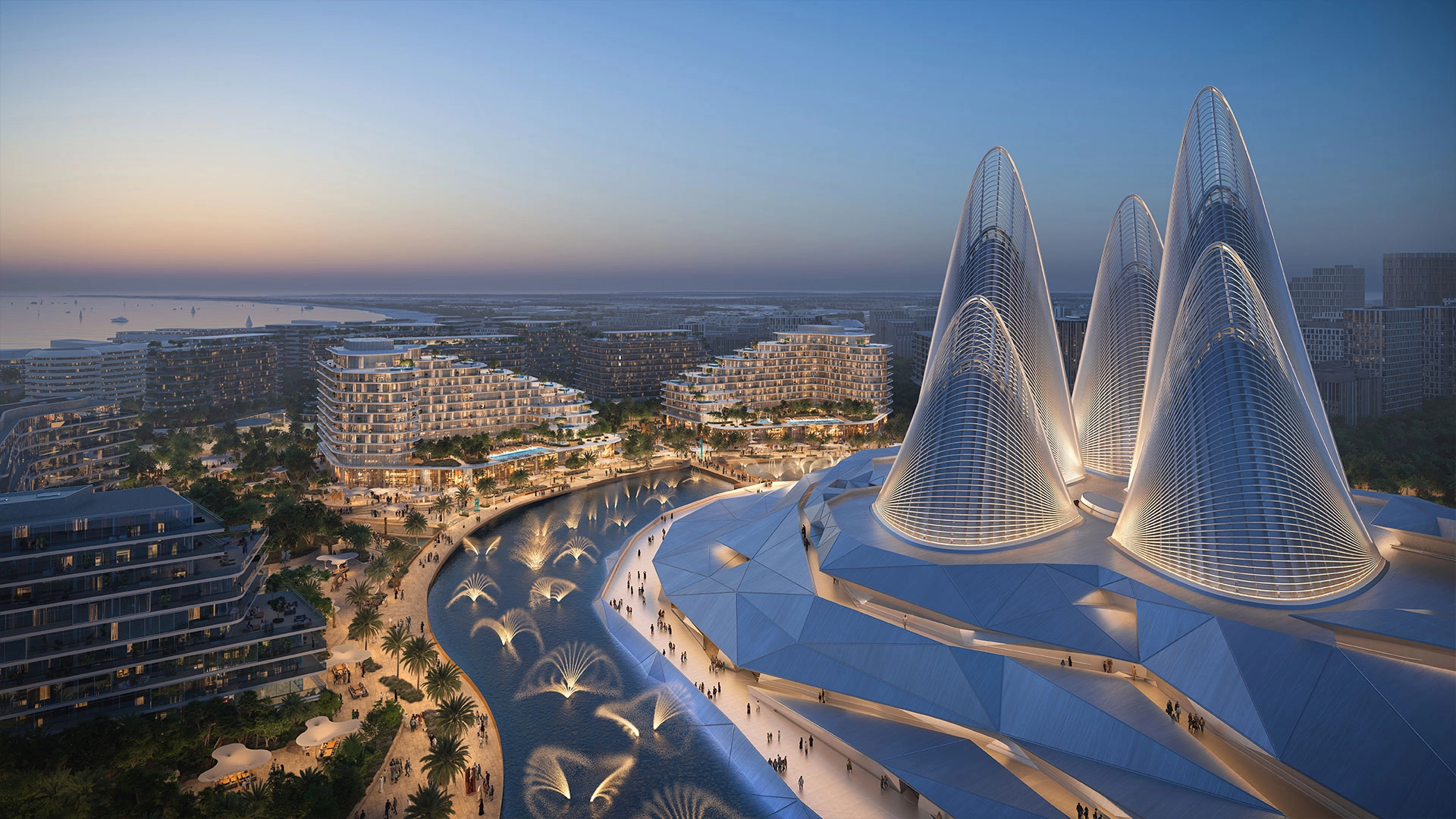
Now look at a typical modern waterfront plan: promenade, trees, open views across a bay, towers providing shade and shelter behind you. It is surprisingly close to that pattern – just vertical and urban.
Prospect and refuge
The second idea is prospect and refuge.
Prospect = you can see a wide area, spot opportunities and potential threats
Refuge = you are sheltered, not too exposed
Humans tend to feel comfortable in places that offer both at the same time.
A high-floor sea-view apartment is almost a textbook example:
Inside the home, you feel protected and in control (refuge).
Through the window or from the balcony, your eyes can scan a huge open horizon (prospect).
You do not consciously think “this matches my ancestral habitat.”
You just feel calm, open and safer.
This is where the emotional value of a sea view starts – long before we talk about price.
2. The science in simple terms
Now let’s look at some of the research that connects views, nature and water with real outcomes. I will keep it to a few core studies, each with its own mini-story.
2.1 The hospital window that changed how we think about views
In the 1980s, psychologist Roger Ulrich analysed records from a Pennsylvania hospital. All patients in his study had gone through the same gallbladder surgery. They were assigned to rooms essentially by chance.
The only meaningful difference:
Some rooms had windows facing trees and greenery.
Others faced a blank brick wall.
When he compared the two groups, he found that patients with tree views:
Left the hospital sooner (on average, almost a day earlier)
Needed fewer strong painkillers
Received slightly better notes in nursing records
Nothing else about their treatment was intentionally changed. The view alone seemed to nudge recovery in a better direction. (Ulrich, 1984 – View through a window may influence recovery from surgery)
2.2 Blue cities, calmer minds
More recent work looks not at single hospitals, but at entire cities.
A 2021 systematic review and meta-analysis pulled together quantitative studies on urban blue spaces – coasts, rivers, lakes and canals in and around cities – and people’s health.
Across the data, the authors found that people who live closer to or have better access to blue spaces tend to show, on average:
Better general health
Lower psychological distress and better self-reported mental well-being
Small but repeated benefits for things like obesity and all-cause mortality
In parallel, a 2023 report from the UK’s National Institute for Health Research reviewed evidence on green and blue space and mental health. It concluded that there is growing evidence for positive impacts on stress, well-being and social contact, even though long-term causal pathways are still being studied.
(Smith et al., 2021 – Urban blue spaces and human health) (Geary et al., 2023 – Green and blue space and mental health)
2.3 Why our brains like “savanna-style” views
The Savanna Hypothesis brings this back to evolution.
Across many experiments where people rate different landscape images, researchers found that people often prefer scenes that look a bit like savannas or parklands: open views, some trees, and water. These scenes are interpreted as resource-rich, non-threatening and easy to navigate. (Bennett, 2019 – Savanna Hypothesis and Landscape Preferences)
If you compare those “ideal” landscape sketches with marketing images for coastal masterplans, the overlap is hard to miss.
2.4 When the view shows up in the price
Finally, how does all this translate into money?
A well-known paper by Benson and colleagues looked at single-family home sales in Bellingham, Washington, a city with ocean, lake, mountain and “no view” properties. They used a hedonic pricing model to isolate the value of different view types and qualities.
Their main result:
High-quality ocean views could add very large premiums compared with similar homes without views, while lower-quality or partially blocked views added significantly less.
The exact percentages depend on category and year, but the pattern is clear: buyers are willing to pay a lot for strong, clean views; weak or cluttered views are worth much less. (Benson et al., 1998 – Pricing Residential Amenities: The Value of a View:)

3. How this shows up in sea-view prices today
If we put all of this together, the “sea view premium” starts to make sense.
A good sea-view home offers three layers of value at once:
Deep psychological comfort
It echoes savanna-like, resource-rich landscapes.
It combines prospect (wide horizon) with refuge (safe interior).
It offers daily exposure to “blue space”, which research links to better mental health on average.
Everyday experience
Morning coffee looking at the water, evening light on the sea, waves in the background – these become small but regular recovery moments in a noisy, busy city.
Over years, that difference in daily environment can be worth a lot to people, even if they never put it into words.
Market demand and scarcity
Waterfront land is limited by geography and regulation.
Many buyers feel this same pull toward water and views.
As studies like Benson et al. show, when enough people want the same thing and supply is limited, prices adjust sharply.
So when someone pays significantly more for a sea-view apartment, they are paying for:
Scarce coastline or waterfront
A different everyday nervous-system experience
And a feature many future buyers and tenants will also value
It is emotional, yes. But it is not random.
4. How to use this when choosing a home
Knowing the science does not tell you what you must buy. But it gives you better questions to ask.
Is this a strong view or a marketing view?
A wide, open horizon of water is very different from a thin blue slice between buildings.
Remember: research shows the biggest price effects for the best views, not just any view.
Does the surrounding environment support the feeling?
A nice view next to constant heavy noise or pollution will not deliver the same mental benefits.
Look for promenades, greenery, walkable paths and calmer soundscapes – this is where “blue space” becomes part of daily life.
What type of buyer are you?
If you will live there, give real weight to how your body feels in the space.
If you are investing, check whether the rent and resale data in that area actually support the extra price for a view.
Do a simple body check
Stand for a few minutes in a non-view unit.
Then do the same in a full sea-view unit.
Compare your breathing, shoulders and general mood. It is a very low-tech, but surprisingly honest test.
5. Where the “sea view effect” is strongest in Abu Dhabi
Without turning this into a sales brochure, there are some clear Abu Dhabi examples where everything we just discussed is very visible on the ground.
Saadiyat Island (beachfront and cultural districts)
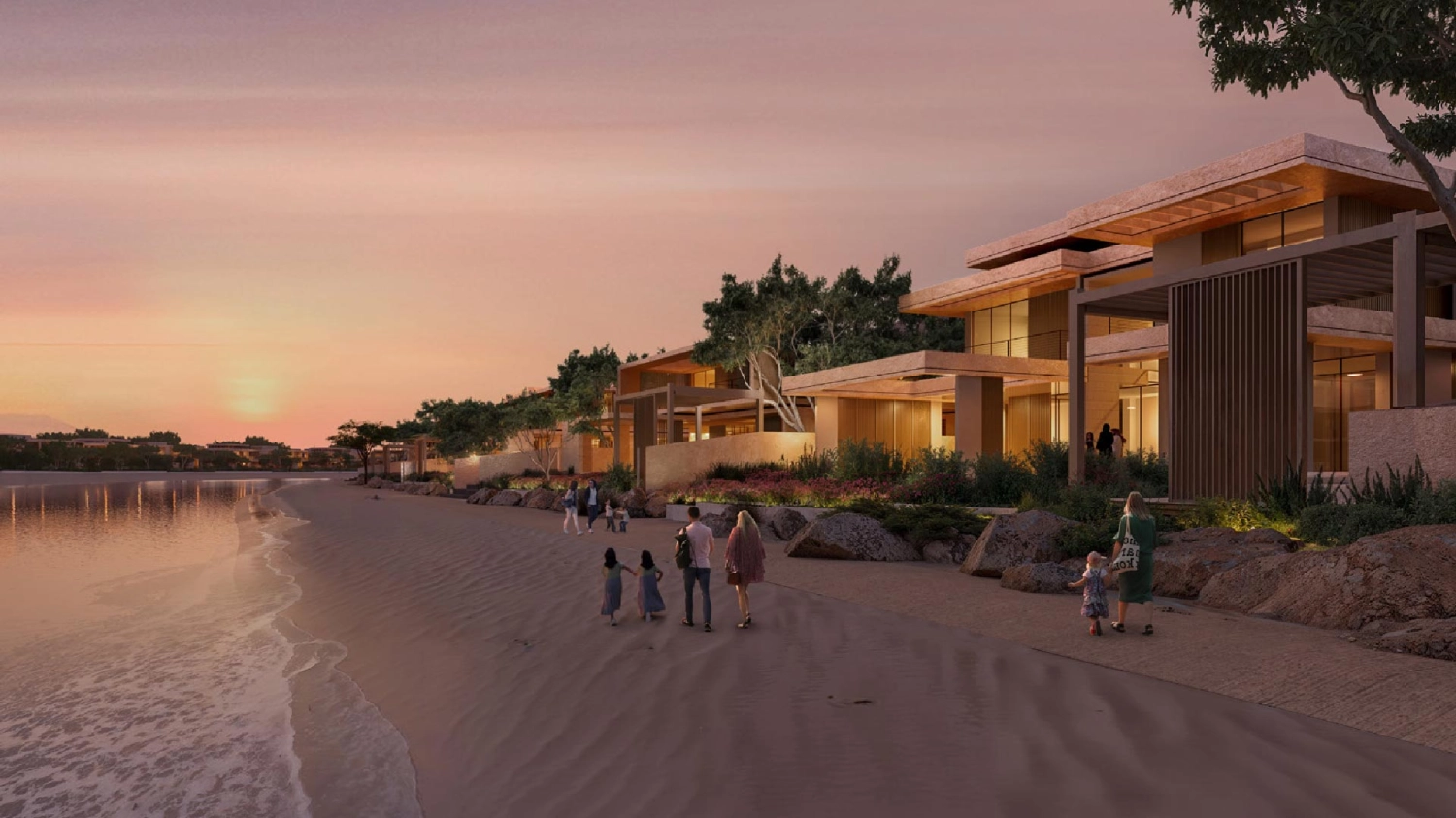
Long open beaches, controlled building heights in many zones, and big, uninterrupted sea views. Add in cultural anchors across the Saadiyat Cultural District, and you get both emotional and lifestyle value.”Al Raha Beach (Al Bandar, Luluat Al Raha and surrounds)
Marina-front and canal-front apartments have clean water views with promenades, cafés and greenery at podium level. Many units enjoy exactly that “prospect + refuge” combination we talked about, especially in communities like Al Zeina. If you’re considering the area, this guide helps: Everything you need to know before you move to Al Raha Beach.”Yas Bay & parts of Yas Island waterfront
Yas Bay & parts of Yas Island waterfront Here you see a mix of broad water views and active public space: restaurants, boardwalks, events. For some people, this balance of blue space and city energy is ideal.Hudayriyat Island (emerging coastal districts)
Hudayriyat Island (emerging coastal districts) Still developing, but the whole concept is built around coastline, sport and outdoor life. As new projects are announced, you can almost see the masterplans trying to frame as many strong water views as possible, and communities like Nawayef West show that direction clearly.
These are the kinds of places where an ancient preference for water, open views and safety meets modern planning and pricing.
Closing thought
Sea-view homes are not just “nicer” boxes in nicer towers.
They are carefully engineered versions of landscapes that our brains have liked for a very long time. The science does not say you must always pay extra for a view. But it does explain why so many people, in so many markets, keep doing exactly that.
When you pay more for a sea view, you are not just paying for photos.
You are paying for how a place makes your nervous system feel – today, and every morning you wake up to that horizon.
