.svg)



 English
 العربية

UAE Property Strategy 2025–2026: Focus on Resilience and Cashflow
- December 15, 2025
- /
- Investments & ROI
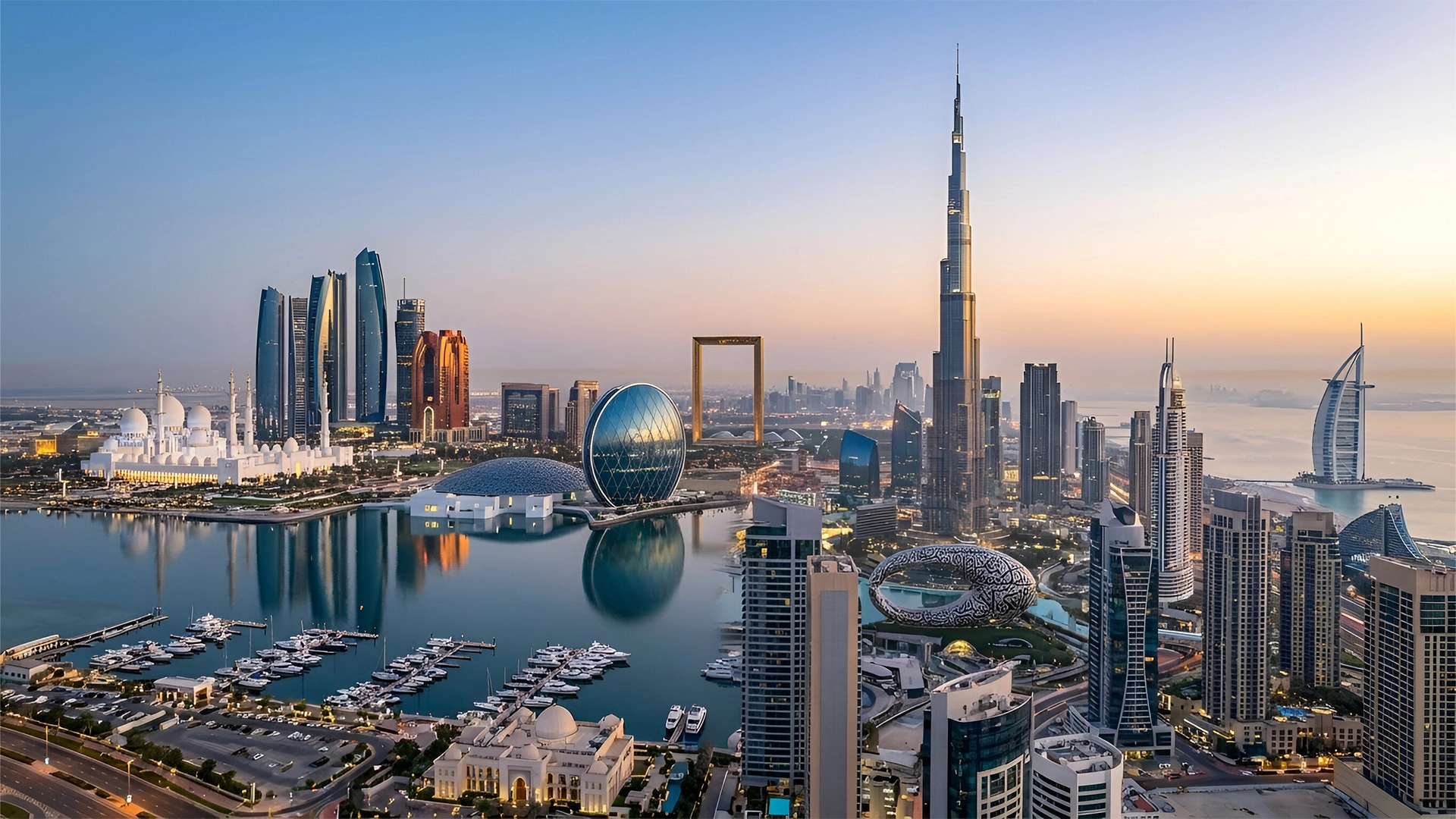
UAE Property Strategy 2025–2026: Focus on Resilience and Cashflow
Dubai has had a strong multi-year run. Prices moved quickly, transactions remained active, and global capital continued to flow in.
The market is now entering a new phase. Fitch, as reported by Reuters, expects Dubai residential prices to decline by double digits in the second half of 2025 and into 2026, mainly due to a substantial wave of near-term supply entering the market.
At the same time, Abu Dhabi is increasingly regarded as a market characterised by durability and income. Not a “hype” story, but a place many investors use for steadier cash flow and long-term holding.
This is not a “Dubai vs Abu Dhabi” article. It is a portfolio view. When one market becomes more supply-sensitive, how should a UAE property portfolio be positioned to maintain resilience and cash flow?
For the broader UAE context, you can also reference: OIA’s H1 2025 Real Estate Market Report.
1) Dubai’s long rally and what investors are watching next
- Fitch Ratings Inc. noted that Dubai residential prices rose by around 60% from 2022 to early 2025.
- The key variable now is the timing of supply. Reuters reported that Fitch expects approximately 210,000 units to be delivered in 2025 and 2026, and that prices could decline by no more than 15% during that phase.
- In practical terms, when deliveries cluster, the market becomes more selective. Two things tend to show up more clearly:
- Buyers negotiate more aggressively in handover-heavy areas, especially when multiple similar options are available simultaneously.
- Rent growth can soften when many comparable units enter the leasing market together.
- So the investor question becomes less emotional and more practical: where should a UAE portfolio lean if the priority is resilience and cash flow?
- What Abu Dhabi has been doing differently?
- Abu Dhabi has not followed the same speed of price growth as Dubai. Demand has been built around master-planned communities, end-user livability, and long-term public and private development.
- In Q3 2025, Abu Dhabi’s market continued to show momentum. OIA’s Q3 update highlights continued sales activity, firmer rents, and steady new launches, with demand holding steady. If you want the Q3 snapshot in one place, see: Abu Dhabi Is On The Front Foot.
- What makes Abu Dhabi feel more “resilient” for many investors is the market structure:
- More focus on the communities people actually live in
- More substantial “use value” (schools, waterfront access, lifestyle infrastructure)
- A buy-to-hold investor base that prioritises occupancy and income
- Examples of demand-led districts (and why they matter) include:
- Saadiyat Cultural District guide
- Al Reem Island: live or invest?
- Al Raha Beach moving guide
- Fahid Island: full guide
- Yas island
- Saadiyat Cultural District guide
3) Abu Dhabi Law No. 2 of 2025: Why the regulation supports investor confidence
In property cycles, regulation is not background noise. It shapes how confidently buyers and financiers engage with the market.
A legal summary of Abu Dhabi’s Law No. 2 of 2025 (effective from 2 August 2025) explains that the law introduces a three-party safeguards framework for developers, purchasers, and financiers, strengthening oversight and supporting investor confidence.
This matters most for off-plan buyers. More apparent oversight and stronger buyer safeguards can improve market quality, particularly as investors become more selective and place greater emphasis on delivery credibility, documentation, and process discipline.
If your strategy includes branded or premium off-plan launches, this guide helps frame what is coming in the capital:
Branded Off-Plan Residences in Abu Dhabi: 2025–2030 Launch Guide.
4) Who does Abu Dhabi fit best right now
Abu Dhabi is not the perfect answer for everyone. But it fits very clearly for three profiles:
Low-risk, yield-focused investors
You want rental income, consistent occupancy, and less volatility.
Family end-users
You prioritise stability and livability over quick resale.
Long-term buyers tied to the capital
Your job, business, or family base is in Abu Dhabi, so you want a market that supports long-term holding.
Also, if net returns and tax considerations drive your decision, this is a useful internal reference:
Abu Dhabi Is the Best City to Invest: The Zero-Tax Advantage Explained.
5) Portfolio view: build exposure, do not “switch cities”
Here is the practical approach many serious investors take. They stop treating Dubai and Abu Dhabi as a rivalry, and start treating them as two different functions inside one portfolio:
- Abu Dhabi can be the resilience and cashflow base (income, livability, long-term demand)
- Dubai can be the higher-upside engine (more upside potential, more sensitivity to supply timing)
- A simple allocation concept (illustrative only) looks like this:
- 60% to 70% Abu Dhabi for resilience and income focus
- 30% to 40% Dubai for higher upside potential and higher volatility
- Before you rebalance, always price the full cost of ownership (fees, service charges, registration). This internal guide is a good checklist:
- Hidden Costs of Buying Real Estate in the UAE.
Final takeaway
If Dubai cools in the second half of 2025 and into 2026 as Fitch expects, it does not mean the market is “done.” It suggests the next phase may reward selectivity: timing, location, unit type, and building competitiveness matter more.
In that environment, Abu Dhabi often becomes more attractive for investors prioritising resilience and cash flow, supported by demand-led communities and a stronger regulatory framework.
If you prefer, we can structure a “two-city portfolio” based on your risk tolerance, holding period, and whether you want income-first or growth-first exposure.
For investors who want demand anchors tied to major lifestyle catalysts, this is also relevant reading:
Disneyland Abu Dhabi: Magic on Yas Island Boosts Real Estate.
