.svg)


 العربية
 English

مشروع سفير أبوظبي في جزيرة ياس: ما قد يعنيه ذلك بالنسبة للطلب على العقارات في ياس وعموم أبوظبي
- May 15, 2026
- /
- السوق والاتجاهات

When a city announces a global-scale entertainment anchor, the real estate question is never “Will this be popular?”
It is: What kind of demand will it create, and where will that demand concentrate?
With Sphere Abu Dhabi confirmed for Yas Island, we now have enough verified details to talk about the likely real estate effects, without hype.
What has been confirmed so far
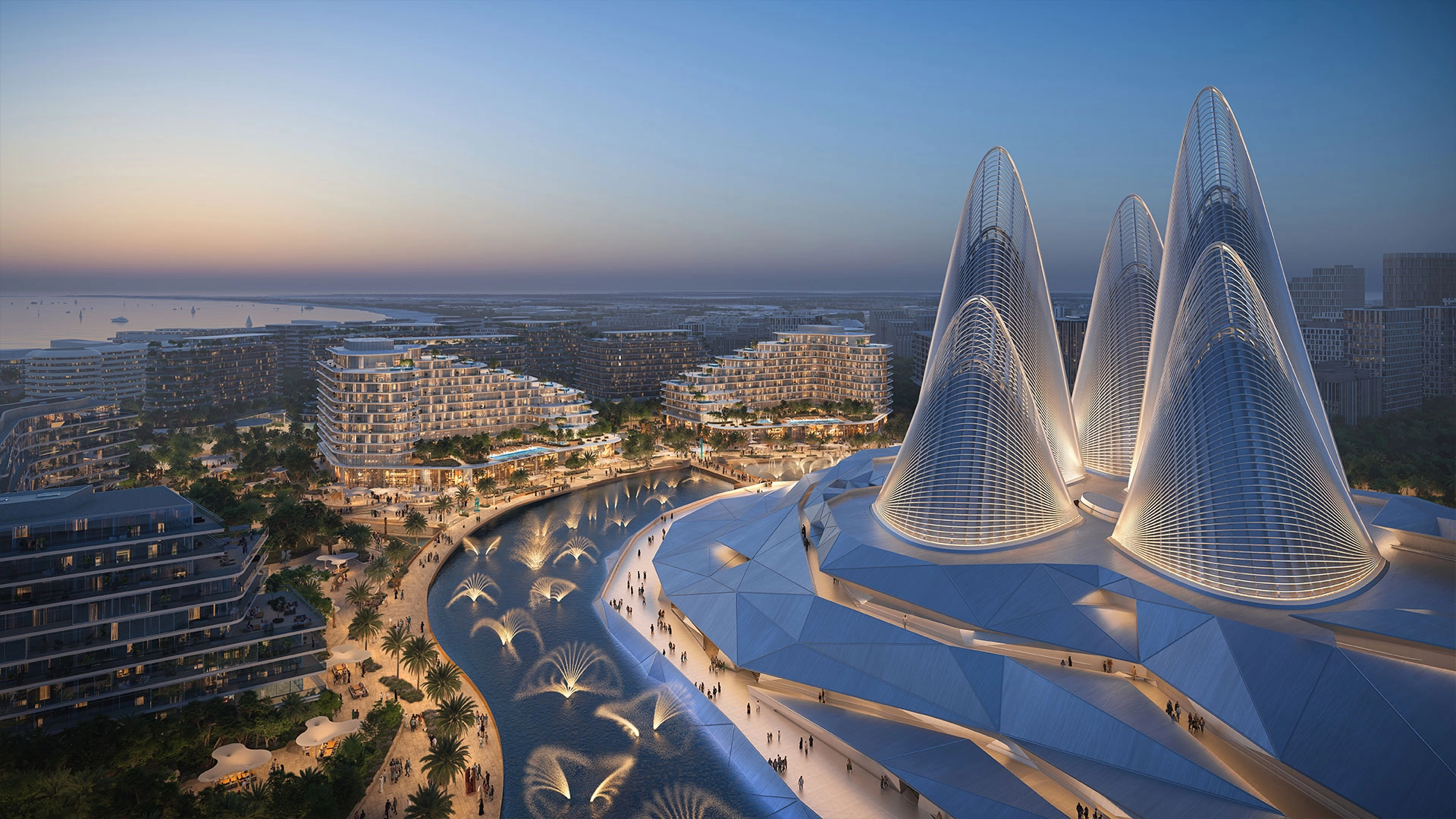
Sphere Abu Dhabi is set to be built on Yas Island, located between Yas Mall and SeaWorld Abu Dhabi. Construction is expected to be completed by the end of 2029, with an estimated cost of $1.7 billion. The venue will have a capacity of up to 20,000 attendees.
The programming will focus on three main pillars: immersive "Sphere Experiences," concert residencies, and brand-led events, which will include conferences, product launches, and sports activities. This diverse mix of offerings is significant because it promotes repeat visitation and boosts business tourism, rather than just hosting one-off headline shows.
Why Yas Island is a strategic location
DCT's chairman described Yas as a destination where various experiences are grouped together, including theme parks, shopping, hospitality, golf, beaches, nightlife, and dining, all within a connected ecosystem. He emphasized the importance of maintaining connectivity between these experiences through transport networks and highlighted the advantage of being close to a major train station as part of the visitor access strategy.
In real estate terms, this distinction is between an "attraction" and an "events district." An attraction typically sees spikes in visitors during weekends, while an events district can sustain year-round visitation patterns. This consistent influx of visitors positively impacts leasing, retail spending, and brand positioning.
How could this affect Yas Island real estate?
1) Stronger year-round demand, not only seasonal peaks
Sphere is designed for resident shows, immersive productions, and recurring brand events.
If the venue executes on that business model, Yas becomes even more “always on.” That typically supports:
- Higher long-term demand from event ecosystem employees and corporate tenants
- more short-stay pressure (where permitted by building rules and licensing)
- improved resilience for retail and F&B corridors that rely on footfall
2) Micro-location premiums will reshape inside Yas
The Sphere site sits in one of the island’s highest footfall corridors (Yas Mall and SeaWorld).
That usually creates a two-speed market:
- Access premium: units that feel close to the action, easy to reach, and convenient for daily life
- Buffer premium: units that are still close, but protected from event-day noise, traffic, and crowd flow
This is why “Yas Island” is not a single market. Unit selection and micro-location become the real differentiator.
If you want a broader Yas demand view, see:
3) Infrastructure upgrades become more coordinated
This is a crucial part of the announcement, clearly articulated. The DCT Abu Dhabi will collaborate with various entities, including the Department of Municipalities and Transport, the Integrated Transport Center, TAQA, Etihad Rail, and Aldar. Their goal is to coordinate enhancements to roads, site access, and overall infrastructure in relation to the surrounding Yas assets.
For property owners, this is significant because major venues can lead to congestion if access is not planned properly from the beginning. Public statements regarding cross-agency collaboration help mitigate this risk.
4) A clearer “hold thesis” for investors through 2029
Markets evaluate future demand in several stages:
1. Announcement Phase
2. Construction and Ecosystem Development
3. Completion and Programming Proof
4. Post-Opening Normalization
Since the completion is aimed for the end of 2029, investors can consider the period from 2026 to 2029 as a window for positioning. This doesn’t imply that prices will solely increase. Rather, it indicates that the narrative will be supported by confirmed infrastructure rather than vague masterplan promises.
What this could mean for Abu Dhabi real estate overall
1) It strengthens Abu Dhabi’s global “destination city” narrative
The project is explicitly positioned as a global icon and a tourism draw, supporting economic diversification and strengthening Abu Dhabi’s sense of place.
For real estate, this matters because international buyers often allocate to cities with easy-to-explain demand drivers.
Sphere is a clear narrative asset.
2) It lands in a market already showing high transaction momentum
Abu Dhabi’s real estate market recorded AED 66 billion in transactions in Q1 2026, the highest quarterly performance on record, per ADREC.
In that context, large-scale announcements can act as confidence reinforcement, especially for overseas buyers who want proof of long-term government-backed investment.
3) Spillover effects are likely, even if Sphere is on Yas
Yas may capture the most direct uplift, but secondary effects often appear across the city:
- As Yas becomes more premium, some buyers rotate to Al Reem for city access and value per square foot
- Some lifestyle buyers rotate to Saadiyat for culture and beach prestige
- New launches on other islands can use Yas’s visibility as a “halo” for Abu Dhabi’s global story
This is not a guaranteed price move. It is a demand-pattern shift.
What OIA would advise buyers to do now
If you are buying to live
Choose Yas for lifestyle, but buy with daily routine in mind:
- access to schools, clinics, and commuting routes
- distance buffers from peak event corridors
- unit orientation and sound exposure
- If you are buying to invest
Treat Sphere as a multi-year catalyst:
- Align your holding period to the 2029 completion window
- Model net yield after service charges and vacancy
- Verify leasing rules and demand drivers at a building level
Next step
If you want a Yas shortlist that is built around your goal (end-use, long-let, or future exit), we can map options by micro-location and risk profile.
Talk to OIA: Contact us
Explore more insights: OIA Blogs
