.svg)




 English
 العربية

Power of Attorney for UAE Property Transactions: Service Costs
- November 25, 2026
- /
- Buyer and Seller Guides
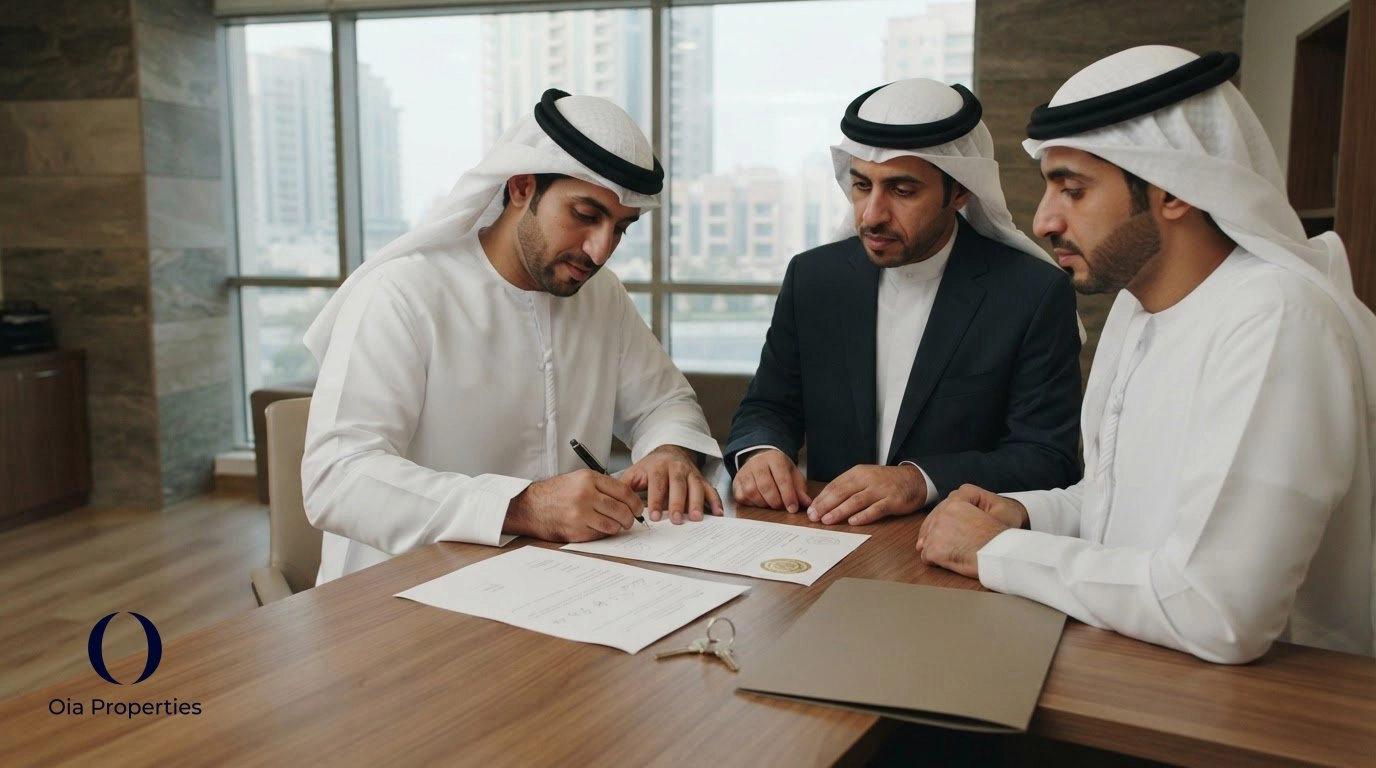
A power of attorney for property transactions in the UAE authorises a representative to act for a property owner within the powers set out in the document. Official notarisation is required, and the wording should clearly define the property and actions covered. Costs depend on the signing route and any additional steps, such as attestation or Arabic translation.
Choosing between broad authority and a POA limited to one transaction determines what your representative can do. This guide covers the main types, document requirements, service packages, and processing timelines, helping you understand the steps before authorising someone to handle a purchase, sale, lease, or other property matter on your behalf.
What Is Power of Attorney?
A power of attorney authorises an agent to act for a principal in legal, financial, or administrative matters. For an Abu Dhabi property transaction, it can allow a representative to complete specified actions when the owner cannot attend. The agent’s authority comes from the document, not their personal relationship with the owner. Clear drafting identifies the property, permitted actions and duration.
Property POAs in the UAE require official notarisation. The principal can use a notary public or an electronic notarisation platform operated by the Ministry of Justice or a local judicial department. Online submission can support document preparation and signing, subject to the platform’s process. The principal reviews the draft, confirms their identity and consent, then meets the notary’s signing requirements.
UAE online POA services can reduce the need for an in-person visit, but the document still requires precise wording and formal execution. The principal provides identity and property details for drafting, reviews the proposed powers and completes the required notarisation. Digital handling does not replace the need for a document tailored to the intended property transaction.
For a POA signed outside the UAE, complete the required attestations before using it in Abu Dhabi. The principal signs before a notary or competent legal authority in the issuing country. The issuing country’s foreign ministry attests the document, followed by a UAE embassy or consulate. After the document arrives in the UAE, the Ministry of Foreign Affairs and International Cooperation attests it. A POA in another language may also need approved Arabic legal translation.
A property POA should identify the property and each action the agent may perform. For example, it may authorise a representative to purchase a named Abu Dhabi property, sign transaction documents and complete registration steps. If the agent must receive funds, include that power expressly. General wording such as “manage my property” may not cover a specific sale or purchase.
A practical drafting and delivery sequence is:
- Define the transaction, property details, and permitted actions.
- Prepare and review the wording, including any required Arabic translation.
- Complete notarisation and overseas attestations where applicable.
- Deliver the final document in the format required for registration.
Before signing, match each power to the intended transaction. Depending on its wording, a POA can cover one or multiple properties, but the agent may act only within its express authority. Property identifiers, specific actions, and a clear duration help the receiving authority assess the document.
General and special powers of attorney
For an Abu Dhabi property matter, choose the POA’s scope according to the actions your representative needs to complete. A general POA can grant authority across several stated matters, while a special or specific POA limits authority to a defined transaction or period. The labels alone do not determine what the agent can do. The written powers and their limits control.
A general property POA may suit an owner who wants one representative to handle several defined tasks or properties. For example, an owner might authorise property management and leasing across specified homes. A special POA can be narrower, such as authorising a representative to complete the purchase of a named Abu Dhabi residence. The wording should make the intended scope clear.
For a purchase, state whether the representative may sign transaction documents and complete registration steps. For a sale, identify the property and expressly authorise the sale. If the representative must also handle a mortgage or receive funds, specify those powers separately. Authority to sell does not itself include authority to receive proceeds, and mortgage powers should not be assumed from general property wording.
A POA may cover one or multiple properties, depending on its wording. For owners with several Abu Dhabi assets, listing the relevant properties and permitted actions can distinguish routine management from a sale or purchase. If the representative needs authority for only one transaction, a narrower mandate can keep unrelated actions outside its scope.
Duration is another drafting choice. The document should make the intended scope and duration clear, and can be tied to a transaction or include an expiry date. Generally, it continues until revoked or expired. Set a period that fits the task, and avoid giving a representative broader or longer authority than necessary.
Use this scope check before finalising the document:
- General authority: define each property task the representative may perform.
- Specific authority: identify the transaction and property involved.
- Additional powers: state separately any authority to sign, mortgage or receive funds.
- Duration: specify an expiry date or tie authority to the transaction.
For Abu Dhabi owners, the practical test is whether the representative can complete the intended property action using only the powers written in the POA. A carefully limited mandate distinguishes authority for leasing or management from authority to dispose of an asset. Match the document to the transaction, not just to the convenience of a broad label.
Arabic translation and original-document requirements
Document language, identity records, and property details affect whether a property POA can proceed to registration. Dubai Land Department acceptance also depends on the document’s format and verification.
Translation and Original Documents
A POA used in the UAE may be bilingual in Arabic and English. If it is not in Arabic, it may require certified Arabic legal translation by a UAE-licensed sworn translator. For a foreign-issued POA, complete notarisation in the issuing country, attestation by that country’s foreign ministry, and legalisation by a UAE embassy or consulate there. The UAE Ministry of Foreign Affairs attestation follows after arrival.
Dubai Land Department Acceptance
Dubai Land Department Circular No. 29/R/2025 sets out guidance on accepting and verifying POAs for real estate dispositions. The owner must provide the original physical POA at a Real Estate Registration Centre; uncertified scans and electronic copies are not accepted there. Verification uses the issuing authority’s official electronic platform, such as Dubai Courts, Abu Dhabi Courts, or the Ministry of Justice eNotary search.
For a Dubai property sale, the POA must identify the property using the details shown on its Title Deed. It should also state the specific authority granted, such as selling, signing transfer documents, or receiving proceeds. If the owner is absent for a title transfer, the Dubai Land Department accepts the owner’s UAE ID or an official POA. Keep identity documents and property record details consistent with the transaction.
The principal must have legal capacity to grant authority. The principal and appointed representative should have the capacity required to grant and carry out the authority. These conditions matter because an agent cannot validly exercise authority the principal could not grant. A POA’s validity also depends on its wording, notarisation and applicable transaction rules.
To reduce risk, limit the POA to the required property and actions, and specify separately any authority to receive funds. A broad or ambiguous mandate can allow unintended actions or cause registration delays. The representative may act only within the authority expressly granted, so precise drafting helps protect the owner’s control.
A principal can generally revoke a Dubai property POA while mentally capable by executing the revocation at the issuing notary and filing it with the Dubai Land Department. Notify the representative and relevant third parties, including the department, banks, and property managers; Article 144 protects a contract made while both agent and counterparty were unaware of revocation.
Dubai property POA service packages and processing timelines
Costs depend on the notarisation route, signatures, translation, and overseas attestations. When working with Oia Properties, clients find that the listed notary fee for a general or special POA is typically AED 100 per signature. Dubai Courts lists AED 100 per party for POA ratification, plus AED 20 for Knowledge and Innovation; relevant amounts are subject to 5% VAT. These are separate fee items, so identify the applicable Dubai process before budgeting.
Package descriptions may combine drafting, review, notarisation coordination, and document delivery. One listed Silver plan states that a government fee of AED 167 is payable at the Notary offices upon signing. Treat this as a package-specific government fee, not as a universal total for every power of attorney for property transactions in the UAE. Translation, attestations for a document signed outside the UAE, and other required steps can affect the overall cost.
Preparation and issuance also have separate timelines. Preparing a property POA typically takes 1-2 working days, depending on requirements and approval procedures. A Dubai property POA usually takes 1 to 3 working days to issue, while digital notary services may issue one within hours. Official durations for notarising a property POA vary, so drafting, approval, and the signing route all matter.
If the principal is outside the UAE and needs a power of attorney for property transactions in the UAE, allow for the additional steps of local notarisation and attestation. The issuing country’s foreign ministry and a UAE embassy or consulate must attest the document before UAE-side procedures. Physical delivery can also affect when the representative can present the POA. A digital appointment may shorten the signing stage, but it does not remove overseas legalisation or document-delivery steps.
Sale proceeds require particular care. The POA must expressly authorise the representative to receive funds. In Dubai, proceeds must be transferred to a UAE bank account in the principal’s exact name as shown on the Title Deed. If the seller has no local bank account, the Dubai Land Department requires the buyer’s manager’s cheque to be issued in the seller’s name. The representative’s authority alone does not change the payee requirement.
Before selecting a package for a property transaction, map its steps to the transaction: drafting, review, notarisation, translation, attestation, and delivery. Determine whether the principal must attend in person or can complete the relevant signing remotely. Then account for the POA’s validity period, since an expired document cannot support the planned transaction.
A trusted representative should receive only the authority needed for the property task. Before signing, Oia Properties recommends confirming that the final document covers the intended transaction and fund-handling instructions. This keeps processing focused and helps prevent a mismatch between the POA and payment arrangements.
Real estate powers of attorney
A property POA lets a representative act only within the real estate powers expressly granted. For buying, selling, leasing, or mortgaging, clearly specify each action. Authority for one transaction does not automatically cover another.
For a purchase, the POA can authorise the representative to negotiate or complete the acquisition, sign transaction documents, and handle registration procedures. For a sale, it can grant authority to sell a named property and process its transfer. A lease or management mandate should specify which property tasks the representative may perform. Mortgage paperwork and
contracts require express mortgage authority.
One document may cover a sale and mortgage, but it must clearly state both powers using wording relevant to each transaction type. For example, authority to sell a home does not, by itself, empower the representative to mortgage it. The same applies to proceeds: receiving sale funds requires express authority. Keep each action distinct so the representative and registration staff can identify the permitted scope.
A property POA may cover one or multiple properties, depending on its wording. For a sale, property identifiers should match the Title Deed record. A representative may also be authorised to apply for a developer’s no-objection certificate for resale and process the transfer at a registration trustee. Include these steps only if they form part of the owner’s intended transaction.
Validity periods and acceptance requirements for a property POA depend on the applicable emirate’s rules and the issuing authority. Check the current requirements before the transaction, and plan around the POA’s scope and validity period.
Acceptance depends on more than the document’s title. The relevant land registration authority may verify POAs through the issuing authority’s official electronic platform. Check whether any restrictions apply to representatives acting in property transactions, including brokers or real estate company staff.
Before the POA is issued, map the proposed transaction to its required actions:
- Purchase: state authority to buy, sign, and complete registration.
- Sale: name the property and grant authority to sell and transfer it.
- Lease or management: define the permitted rental or administrative tasks.
- Mortgage: expressly authorise the relevant mortgage documents and procedures.
This transaction-first approach gives owners a clear record of what the representative may do. It also helps prevent approval delays caused by a mismatch between the POA’s wording and the requested real estate action.
