.svg)

 English
 العربية

Impact of Expo 2020 Legacy on Dubai Property Values
- November 24, 2026
- /
- Investments & ROI
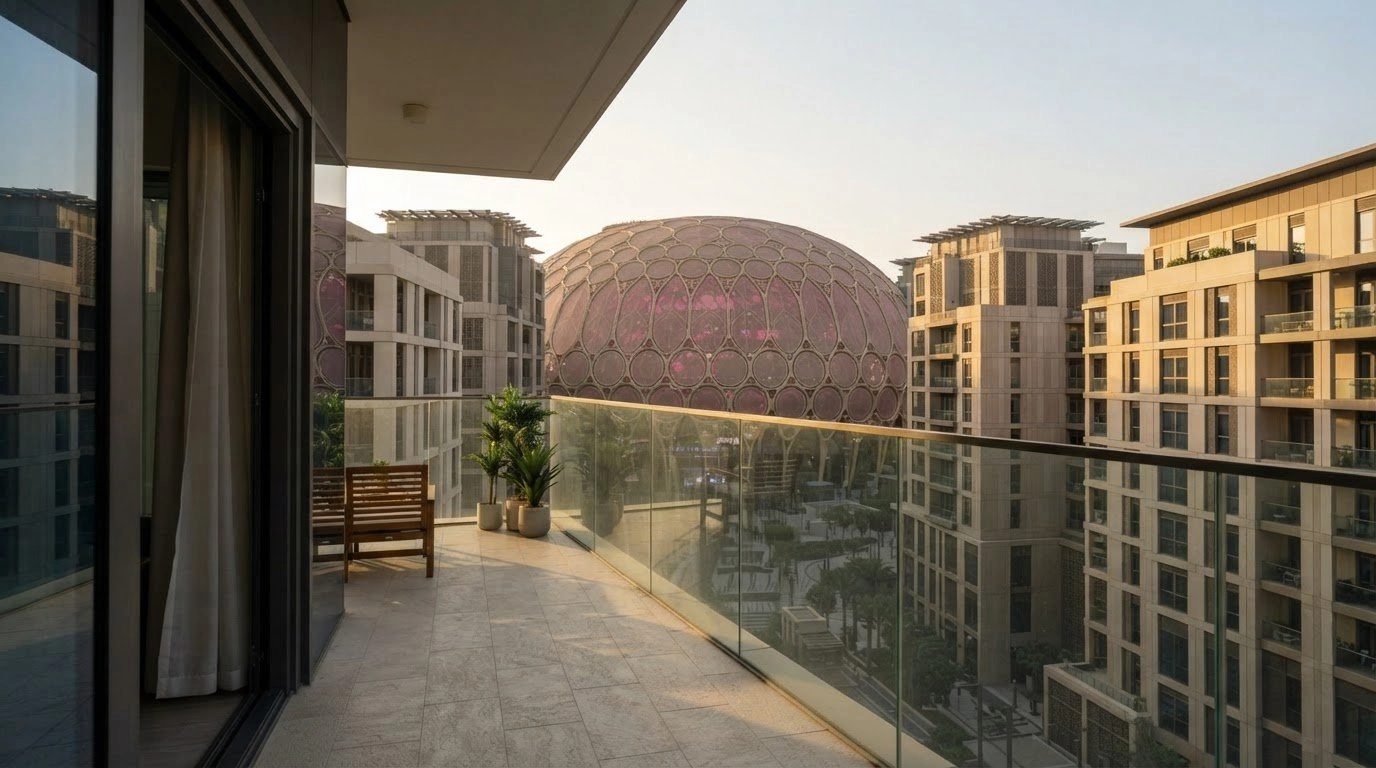
Expo 2020’s legacy continues to shape Dubai’s property conversation, but its influence is not the same across every area or property type. Expo City Dubai offers a clear example of how an event site can become part of the city’s longer-term development story.
For buyers and investors, that story is context, not a promise of property growth. Location, project delivery, access, and local demand still matter when assessing a specific home or investment.
This article examines the Dubai areas, projects, and market factors connected to Expo’s legacy, helping you assess how the district’s transformation fits into the wider real estate picture.
Key Takeaways
• Assess Expo City alongside nearby Dubai South: access, amenities, and future development all shape a location’s appeal.
• Compare residential projects by their location, property type, and development stage rather than assuming Expo’s legacy affects every home equally.
• Understand how Dubai’s real estate laws and transaction requirements apply before committing to a purchase or off-plan investment.
• Read market data in context. Property type, supply, and local demand can influence values and activity across the area.
Table of Contents
1. Areas and Infrastructure Shaping Expo City Dubai
2. Real Estate Developers and Projects in Dubai’s Expo Legacy
3. Dubai Real Estate Laws and Regulations
4. Expo 2020’s Impact on Dubai’s Real Estate Market
Areas and Infrastructure Shaping Expo City Dubai
Expo City Dubai sits within Dubai South, about 37 km south of downtown Dubai. Its property context combines transport access, public space and a phased urban plan.
Property Sale Prices and Rental Demand
Sale prices and rental demand indicate how buyers and residents respond to a district. In Expo City, averages vary by property type, so figures for apartments, villas, townhouses and land are not directly comparable.
Rental interest depends on more than proximity to the former Expo site. The planned community, nearby employment, and access to everyday destinations can all shape a home’s appeal. Compare the specific property type and its position within Expo City or nearby Dubai South instead of relying on a single area-wide average.
Post-Expo Market Comparisons
Dubai’s post-Expo approach can be compared with other event legacies by looking at what remains in use and how the site connects with the city. Expo City’s retained infrastructure, homes, workplaces, and public spaces make its transformation more than a reuse of event venues.
That distinction matters when assessing property: ongoing uses can help keep a district relevant after an event ends. Compare how infrastructure serves residents and businesses over time, rather than assuming every major-event location follows the same property pattern or achieves the same market outcome.
Retained Expo Infrastructure
Expo City occupies a 438-hectare former Expo 2020 site, and 80% of the event’s infrastructure was retained. The site is being developed in phases, with a master plan intended to create a mixed-use urban hub rather than a standalone exhibition destination.
The district’s design follows the principles of a 15-minute city, bringing destinations closer within the community. Its green network includes more than 45,000 square metres of green space and a 5 km loop. These features add recreational and public spaces to the development, while the phased plan shapes how new homes and other uses join the existing site.
Transport Connectivity
Dubai Metro’s Route 2020 connects Expo City with key areas, supporting access to the district without relying only on road travel. Its location in Dubai South also links the Expo site to a wider area shaped by logistics, trade and residential development.
Recreation infrastructure supports local movement as well. Expo City includes 10 kilometres of bike tracks and 5 kilometres of jogging paths, alongside its green loop. These facilities serve residents and visitors within the district. Compared with event sites that lack lasting transport and public-space functions, Expo City’s continuing use of these assets is central to its post-event identity.
Real Estate Developers and Projects in Dubai’s Expo Legacy
Expo City’s residential pipeline is turning the former event district into a place to live, not just a destination to visit. Its named projects offer different ways to assess that transition.
Prices, Yields and Demand
Prices and rental yields measure different aspects of property performance, and neither has one figure that applies to all Dubai South homes. Results depend on property type, project stage and rental demand.
Expo Village residences launched in the fourth quarter of 2022, providing an established residential reference point. Newer Expo City developments add further supply, while workplaces and wider Dubai South activity may support demand. For investors, compare the intended tenant profile and the property’s delivery stage instead of assuming event exposure alone determines returns.
Investment Risks Near Expo City
Risks include phased delivery, competing homes, and demand growing at a different pace from supply. These factors can affect occupancy and rental performance, even when a project is part of a prominent master plan.
Scheduled handover dates also need careful interpretation. Mangrove Residences and the Expo Valley villas had been scheduled for first handovers in 2026, Sky Residences for the fourth quarter of 2026, and Sidr and Al Waha Residences for 2027. For an investment decision, the relevant issue is the project’s actual stage and contractual terms, not the original schedule alone.
Expo City Dubai’s residential portfolio spans several named projects across its districts. Mangrove, Sky and Sidr Residences bring apartments into the city’s central development story, Al Waha Residences convert former Expo pavilions into apartments and lofts, and Expo Valley adds villas and townhouses. These names matter because each project represents a separate opportunity to assess location, property type, and delivery status.
Expo Valley Views’ design sets it apart from a conventional apartment scheme. Its buildings rise to varying peaks, forming a terraced skyline inspired by mountain landscapes, with references to desert ecology and mid-century modern architecture. Green corridors and interconnected courtyards are intended to link the community and cool shared spaces naturally. The design creates a distinct residential environment, but buyers should still assess each home on its own terms and setting.
Expo Valley Views, an apartment community within the wider Expo Valley district, comprises eight low-rise buildings. Its scale shows how the residential district is planned to grow in phases rather than open as one completed neighbourhood. The surrounding homes, amenities and activity can therefore change over time, shaping the experience of early residents and later buyers differently.
When comparing projects, distinguish between a completed residence and a home still in development. Review the project stage alongside the location, intended use and relevant contractual provisions. Expo City’s named developments illustrate the range of its residential pipeline, but a project name or design vision cannot replace a property-specific assessment.
Dubai Real Estate Laws and Regulations
Buying property in Dubai requires more than assessing location and market potential. The legal and contractual position depends on the property, transaction structure, and documents. For an Expo City or Dubai South purchase, separate the development’s long-term vision from the rights and obligations attached to the individual home or investment.
Start with the property’s legal description and the party selling it. The written documents should identify the unit or plot, the parties, the agreed price, and the interest being transferred. These details matter because project marketing may describe a district or lifestyle, while the purchase agreement governs the specific asset. Before committing, check that names, property identifiers, and commercial terms align across the documents.
Off-plan transactions require particular attention to delivery and payment provisions. Read how the payment schedule is set out, what completion or handover means, and how the contract addresses specification changes, delays, or termination. Before paying, confirm that the sale will be registered with the Dubai Land Department and that payments go into the project’s escrow account, as Dubai law requires for off-plan sales. Project descriptions may refer to planned infrastructure, sustainable systems, or future amenities. Treat these separately from contractual commitments unless the agreement clearly includes them.
For a completed property, focus on the ownership documents, the unit’s boundaries and any obligations that continue after transfer. Review the terms for shared facilities, building maintenance and use of common areas. In a mixed-use district such as Expo City, an apartment’s practical value can partly depend on how residential access and shared spaces relate to commercial or public areas. The documents should clearly set out the property and its associated obligations.
Leasing adds another layer. A rental agreement should clearly state the parties, property, rent, duration, payment terms, and each side’s responsibilities. For investors, these provisions affect how a unit can be operated and what commitments apply during occupancy. Property management arrangements should also define their scope, decision-making authority, and reporting expectations. Keep the lease and management agreement distinct from the purchase documents.
Dubai’s regulatory framework can vary according to the asset and transaction. Do not assume that a rule or contract term for one project automatically applies to another. This matters across Dubai South, where Expo-linked residential, logistics and commercial development may involve different asset types and project stages. Review the specific documents, intended use and practical obligations together.
For a property portfolio, consistency matters. Keep a clear record of each asset’s ownership documents, purchase or lease agreements, payment obligations and management arrangements. This helps show how individual commitments fit the wider investment strategy. The principle is straightforward: assess the actual property and its written terms, not the Expo legacy alone.
Expo 2020’s Impact on Dubai’s Real Estate Market
Expo City Dubai and Dubai South had the most direct connection to Expo 2020’s property legacy. Areas farther from the site had less direct exposure, while their market activity depended on separate local drivers. The event’s legacy continues to influence Dubai’s property sector in 2026 and beyond, but that influence does not establish a uniform price effect across the emirate.
Expo 2020 officially concluded in March 2022, leaving a major event site to be repurposed. Its effect on real estate works through several channels: infrastructure reuse, public transport access, jobs, new residential supply, and attention from businesses. These mechanisms can influence buyer and tenant interest, but they affect each location differently. Proximity alone does not explain a property’s value or future performance.
Dubai South’s connection to Expo City places it within a wider development story. Residential areas sit alongside logistics facilities and free zones, creating a varied economic and housing environment. An EY study published in 2023 projected that Expo 2020 and its legacy will support about 1.04 million full-time-equivalent job-years between 2013 and 2042, or more than 35,000 jobs a year, across sectors including construction and hospitality. That employment supported activity during the event, while lasting housing demand depends on the jobs and residents that continue to anchor the area afterward.
Market activity also reflects the balance between new homes and occupier demand. Expo City’s residential projects add to the local offering, while Dubai South’s broader development may attract different household and business needs. More homes increase choice, but supply growth can also give buyers and tenants alternatives. For investors, compare project stage, property type and the district’s evolving employment base, not simply conditions before and after Expo.
Interpret property values at the level of the specific location and asset. A citywide movement may not reflect conditions around Expo City, while a district average can conceal differences between apartments, villas and land. When reading a market report, separate transaction activity from price movement and check whether the figures cover completed or off-plan property. This avoids treating the event itself as a valuation formula.
The wider legacy includes a shift from event spaces toward a permanent urban and commercial destination. Expo City’s role in Dubai’s long-term plans may strengthen its visibility, while Dubai South’s logistics and residential development provide additional context. These are structural influences, not assurances of appreciation. Property decisions still depend on location, project delivery, usable amenities, and demand for each property type.
The clearest takeaway is that the impact is selective. Expo City and nearby Dubai South have the strongest physical links to the event’s infrastructure and redevelopment. In areas without that connection, Expo’s effect is less direct and harder to separate from wider Dubai market forces. Assess each estate through its own development pipeline and buyer or tenant profile, rather than assuming the legacy has lifted every market equally.
Real estate projects are also transforming Expo legacy structures into homes.
Oia Properties
Oia Properties can help you explore property options across the UAE, including Dubai homes and off-plan investments against the backdrop of Expo City’s evolving market. This is a natural next step after weighing the area’s infrastructure, development pipeline, and potential risks, when you are ready to consider specific real estate choices.
The right choice starts with your priorities. An apartment may suit someone seeking a home in a growing urban district, while a villa or townhouse may fit a preference for a different format. Oia Properties offers apartments, villas and townhouses for sale, giving you options to compare by location, intended use and the kind of property you want to own.
Expo City’s legacy is part of the location story, not a substitute for assessing the home itself. Consider how surrounding development, transport access, public spaces and residential supply relate to your plans. Your decision may also depend on whether you want a completed home or are considering an off-plan investment. Each involves a different development stage and set of purchase considerations.
For an off-plan opportunity, focus on the project’s stated scope, payment terms, completion provisions, and the features documented in its purchase agreement. For a completed home, consider its location within the district, layout, and relationship to nearby amenities. These distinctions keep the decision grounded in the property, rather than broad expectations about future growth.
Market figures also need context. Expo City’s reported average sale prices vary by property type, while wider Dubai South conditions reflect their own supply and demand. Treat averages as reference points, not valuations of individual homes. The property’s specific features, development stage, and intended use all matter when deciding whether it fits your objectives.
Oia Properties’ portfolio of apartments, villas, townhouses, and off-plan investments gives buyers different ways to navigate the region's changing residential market. Start with the location you are considering, the type of home that suits your plans, and whether you prefer a completed property or planned development. Clarify your priorities, then assess each option against the actual property and its terms.
Frequently Asked Questions
Which Expo 2020 sites and infrastructure projects were converted for post-event use?
The former Expo site became Expo City Dubai, with venues adapted for ongoing urban and event use. Upgraded Expo City venues hosted COP28, the United Nations climate summit, in 2023. Al Wasl Plaza and Terra remain prominent examples of Expo’s built environment: Al Wasl’s dome is 67 metres high, while Terra features a 130-metre-wide solar-paneled canopy. The transition also involved removing temporary structures, rather than preserving every event building.
How has Expo City Dubai affected residential and commercial real estate demand?
Expo City’s residential and commercial mix gives households and businesses reasons to consider the district beyond its event history. New housing supports a residential community, while workplaces and exhibitions can attract professionals and business visitors. For a specific property, assess whether its location and type suit likely occupants: an apartment for local workers has a different demand profile from space intended for commercial use.
What transport and infrastructure links built for Expo 2020 continue to support property values?
Dubai Metro’s Route 2020 remains a key public transport link serving Expo City. Its practical value depends on how a home connects with a resident’s regular destinations, not simply on being near a station. Retained site infrastructure and public spaces also support daily use. For property comparisons, consider the actual journey to work, services, and leisure destinations alongside the home’s own features.
How did Expo 2020 influence Dubai property investment, transactions, and foreign buyer demand?
Expo 2020 gave Dubai an international showcase, bringing millions of visitors to the city and raising the profile of its development ambitions. That exposure can inform foreign buyer interest, but it does not establish that the event alone caused a change in transactions or values. Investors still assess the specific property, project stage, local supply, and intended use before deciding whether an opportunity fits their objectives.
